Hockey Checking Rules: What Makes a Hit Illegal?
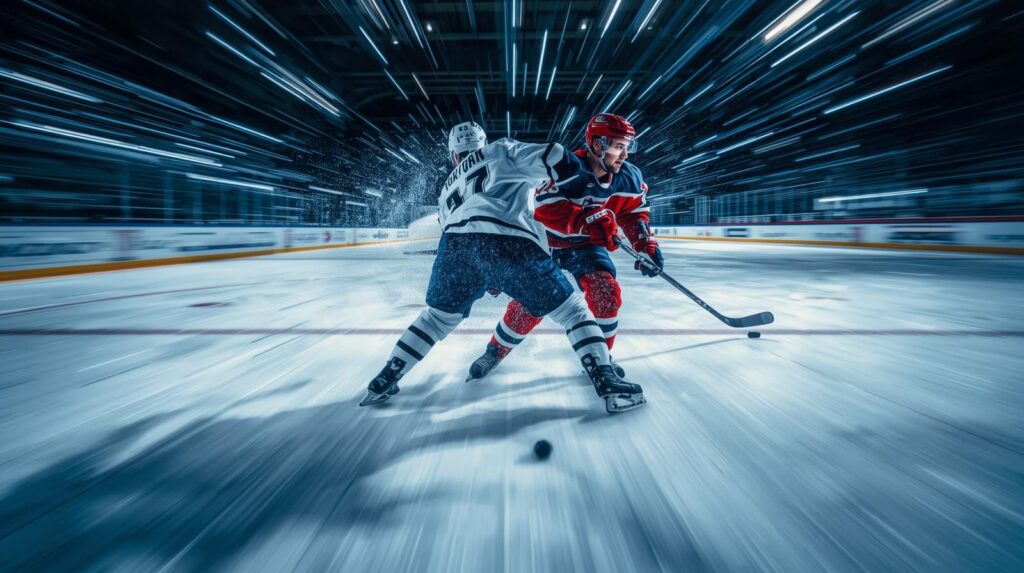
Checking in hockey is regulated contact and pressure that helps the defending side break up an attack and regain control of the puck. The underlying logic is similar across most rulebooks: contact as part of competition is allowed, but dangerous, late, or clearly “punitive” actions quickly turn into penalties. The details, however, depend on the rules of the specific league and level: the NHL, IIHF, USA Hockey, NFHS, and national federations describe the same situations differently and may emphasize different points in a given season.
Table of Contents
- What Is Checking in Hockey? How the Term Is Used in the Game and in the Rulebook
- Legal Checking vs Penalties: How Referees Make the Call
- Types of Checking in Hockey
- The Most Common Checking Penalties
- Penalties for Checking-Related Infractions
- Why Checking Is Judged Differently Along the Boards, in Front of the Net, and in Open Ice
- NHL vs IIHF vs USA Hockey vs NFHS: Why the Same Hit Can Be Called Differently
- Women’s Hockey and Age Levels: How the Allowed Level of Contact Changes
What Is Checking in Hockey? How the Term Is Used in the Game and in the Rulebook
In hockey talk, checking is often used broadly. It can refer to body contact, stick work to separate an opponent from the puck, and defensive pressure all over the ice. Players, coaches, and commentators talk this way—and that’s normal for the living language of the sport.
Official rulebooks more often use narrower labels: different types of contact and specific infractions are described separately—for example, head contact, checking from behind, cross-checking, or dangerous contact along the boards. That’s why it’s easier to treat checking as an umbrella term and sort out controversial moments through the specific rule your league applies.
Legal Checking vs Penalties: How Referees Make the Call
Hockey rules don’t work on a “contact is allowed or banned once and for all” principle. The evaluation is almost always contextual, which is why episodes that look similar can get different calls in different leagues and even in different games.
The first question is usually simple: how connected the contact is to the play. Contact on a player who has the puck or is directly involved in the battle for it is more often seen as part of the game. Contact on a player without the puck often shifts into interference. In North American interpretations, including the NHL, there is a practice of being more forgiving about a short “reasonable” interval after a pass, when the contact looks like a continuation of the same sequence. In international and many amateur formats, that interval is often read more strictly.
Then referees look at vulnerability and the point of contact. Modern standards are especially sensitive to hits to the head and neck area, and to situations along the boards where an opponent doesn’t see the pressure or is caught in an awkward position. In many rulebooks, responsibility for safe contact lies with the initiator: if a player is vulnerable, the expectation is controlled pressure rather than something carried through to an injury-risk outcome. In USA Hockey guidance, this idea is usually stated directly: the player delivering contact is responsible for not putting an opponent in danger.
Another marker is the way a player enters the contact. Building speed over distance, “flying in,” leaving the feet, or an obvious attempt to hit for the sake of hitting are signs that—depending on the specific rulebook—can lead to a separate infraction such as charging, or can increase the penalty under related provisions.
Types of Checking in Hockey
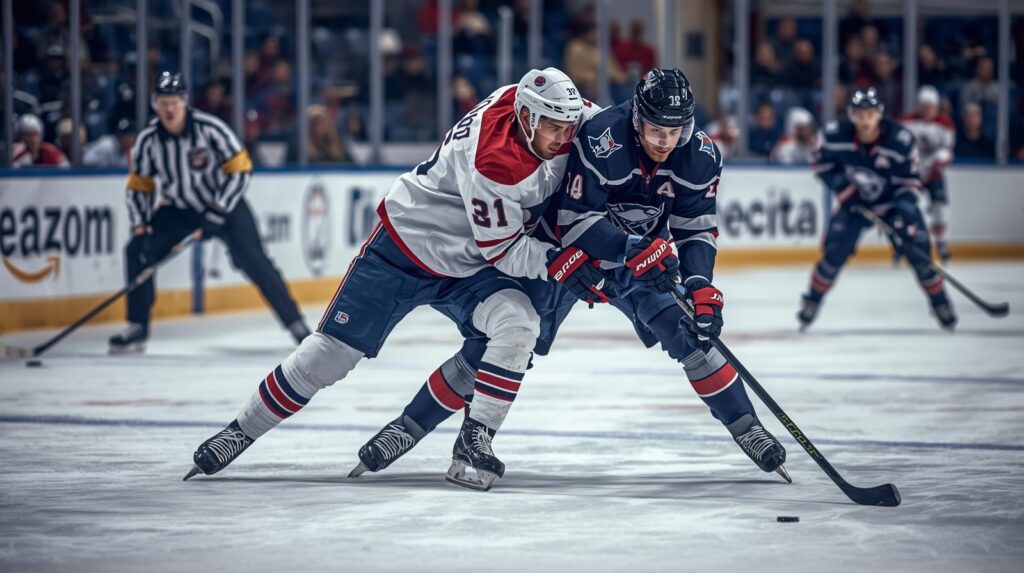
Terms matter not for vocabulary’s sake, but as a way to understand what exactly happened in a play and why a referee may have seen a violation there.
Body checking
This is usually understood as body contact intended to separate an opponent from the puck or disrupt their progress. League guidance often repeats the idea “body, not head,” and it reflects today’s safety logic well, even though specific criteria and interpretations differ across leagues.
In USA Hockey materials and in seasonal points of emphasis, you often see the approach described as “play the puck first” (sometimes framed as stick on puck). This is more about an execution standard and what referees want to see in borderline situations. The absence of an obvious attempt to play the puck with the stick doesn’t automatically make contact illegal, but it raises questions about the motive and quality of the hit.
Competitive contact (body contact)
In many formats—especially where “full” checking is limited—competitive contact for position remains allowed: resisting with the body, battling for balance, board play for space, pressure without a “blow-up” hit. That’s how rulebooks often work where contact is permitted but big, hit-style body checks are not.
The line is usually close. When positional battling turns into blocking a player’s path without a hockey reason, holding, shoving with the hands, or active stick work against the opponent rather than the puck, the referee is no longer seeing “battle,” but a specific infraction.
Stick checking
Different forms of stick checking are a normal part of hockey, from a clean poke check to lifting an opponent’s stick to prevent a play on the puck. Problems start when the stick is used not for the puck but to hook, slash, or trip. Small contact on the hands or legs doesn’t always mean a penalty by itself, but if under that league’s criteria it becomes hooking, slashing, or tripping, the play will be penalized.
Forechecking and backchecking: pressure by zone
Forechecking and backchecking are about a team’s pressure structure: how they challenge breakouts, how they pressure defensemen, how they track back on an attack. These actions often lead to contact situations, but they don’t “legalize” a collision on their own. The evaluation still runs through the rules on contact, interference, and dangerous plays.
The Most Common Checking Penalties
The list of infractions is similar in most leagues, but the wording and penalty ranges are best checked in your organization’s rules: some set tighter thresholds, some looser, and some put extra seasonal emphasis on specific situations.
Contact on a player without the puck is most often called interference. In North American practice there may be a short “window” after a pass where contact is still treated as part of the same sequence; once it ends, a late hit is usually read as interference or as roughing, depending on the force and nature of the action.
Dangerous contact along the boards is singled out precisely because of consequences. The infraction here is more often tied not to the fact that players are near the boards, but to an opponent being dangerously checked into the boards. Referees judge distance, speed, direction, control, and the vulnerability of the player receiving the contact.
Checking from behind is among the riskiest situations: the opponent often doesn’t see the threat and can’t brace. This is especially critical along the boards, where the fall can be severe. In many modern interpretations, the initiator carries heightened responsibility: if the opponent is in a vulnerable position, the expectation is that pressure will be stopped or reduced.
Head and neck contact is one of the most sensitive areas in today’s rules. Criteria differ: some emphasize the “main point of contact,” others avoidability and vulnerability, others a combination of factors. The general principle is similar: the player initiating contact must control it to avoid head contact, and these moments are reviewed especially closely.
There is also a group of infractions where contact becomes an issue because of technique. Charging is usually tied to how a player enters contact—through acceleration, a jump, or a demonstrative attempt to deliver a hit instead of a hockey play. Elbowing, kneeing, and cross-checking are separate infractions because they change the nature of the collision and increase injury risk.
Late contact and actions after the whistle are often penalized more harshly not only because of the hit itself, but because of escalation risk. How exactly it is recorded depends on the rulebook: in some places it’s roughing, in others unsportsmanlike conduct, in others a misconduct penalty.
Penalties for Checking-Related Infractions
The names of penalties in hockey are often similar, but the consequences can differ across codes and levels.
A minor penalty is usually assessed for standard infractions without signs of particular danger. A major penalty is used when the play is more serious in force, risk, or outcome. Disciplinary sanctions also exist and can mean removal for the rest of the game and further league review. Some systems use a match penalty format, and its consequences depend on the rulebook, but it’s usually not just time on the bench—it also involves a mandatory report and possible additional measures.
In practical terms, the officiating logic is simple: the more vulnerability, avoidability, head contact, checking from behind along the boards, speed buildup, and a “punishment” feel there is in a play, the higher the chance it won’t be a minimal penalty.
Why Checking Is Judged Differently Along the Boards, in Front of the Net, and in Open Ice
Along the boards, control is almost always the key. Geometry changes the consequences: even a small shove can lead to a dangerous fall if a player loses balance and goes into the boards while the opponent continues moving “through” them.
In front of the net there’s a lot of battling for screens and position. Simply being near the goalie is not usually prohibited, but actions that prevent the goalie from moving, seeing the puck, or playing the moment can easily become goaltender interference. The area in front of the net, including the crease, is better understood as a zone of heightened sensitivity to those actions than as a place where skaters are absolutely forbidden to be.
In open ice, speeds are higher, so the point of contact and avoidability become especially important. It’s easier to get a penalty for a dangerous play even without “dirty” intent: a mistake in angle or timing quickly makes a collision injury-risk.
NHL vs IIHF vs USA Hockey vs NFHS: Why the Same Hit Can Be Called Differently
The NHL is usually associated with a more physical game, but the league has for years tightened its disciplinary response to head hits and dangerous checks. The IIHF and international tournaments often hold more firmly to a safety standard and may call late contact and certain types of collisions more strictly. USA Hockey regularly publishes seasonal points of emphasis and guidance on enforcement standards, emphasizing the initiator’s responsibility and a hard line on dangerous plays. The NFHS, in its communications and rule changes in different years, has also emphasized the need for strict responses to the highest-risk situations along the boards and on checks from behind to reduce injuries at the high school level.
The point of these differences isn’t an argument about “who’s right,” but the reality of officiating: different organizations have different wording, different emphases, and sometimes different penalty thresholds.
Women’s Hockey and Age Levels: How the Allowed Level of Contact Changes
In many women’s rulebooks, positional contact in puck battles is allowed, but body checking in the style of a full hit is restricted. At certain levels and in certain leagues, details can differ, so the exact answer is always found in the regulations of the specific tournament and season.
Across age levels, the logic is similar: restrictions on body checking are set not by “tradition,” but by the level of risk a given competition system accepts. In recreational leagues, this is often stated directly: competitive contact is allowed, while body checking is not.