Goalie Interference: What Makes a Goal Illegal
Table of Contents
- Why Goalie Interference Causes So Much Debate
- What Is Goalie Interference in Hockey?
- What Referees Look For: Impact and Who Initiated Contact
- Key Terms: Goal Crease, Contact, Screen, and “Reasonable Effort”
- Contact in the Crease vs. Contact Outside the Crease
- When a Defender Pushes an Attacker Into His Own Goalie
- Is There a “Three-Second Rule” for Goalie Interference?
- Common Goalie Interference Situations Around the Net
- NHL Video Review and Coach’s Challenges: What It Clarifies and What It Doesn’t
- Why Similar Goalie Interference Plays Get Called Differently
- NHL vs. USA Hockey vs. IIHF vs. Roller Hockey Rules
- What Usually Reduces the Risk of a Disallowed Goal or a Goalie Interference Penalty
Why Goalie Interference Causes So Much Debate
Goalie interference is one of those situations where the rulebook collides with the game’s real-time chaos. In front of the net you get screens, battles for position, defenders shoving, an attacker’s line changing mid-play, the goalie moving for a save, and a rebound attempt all at once. Video review helps you catch details, but it doesn’t turn the decision into arithmetic: in most rule codes there’s still a judgment call about whether the attacker’s actions actually limited the goalie’s ability to protect the net.
What Is Goalie Interference in Hockey?
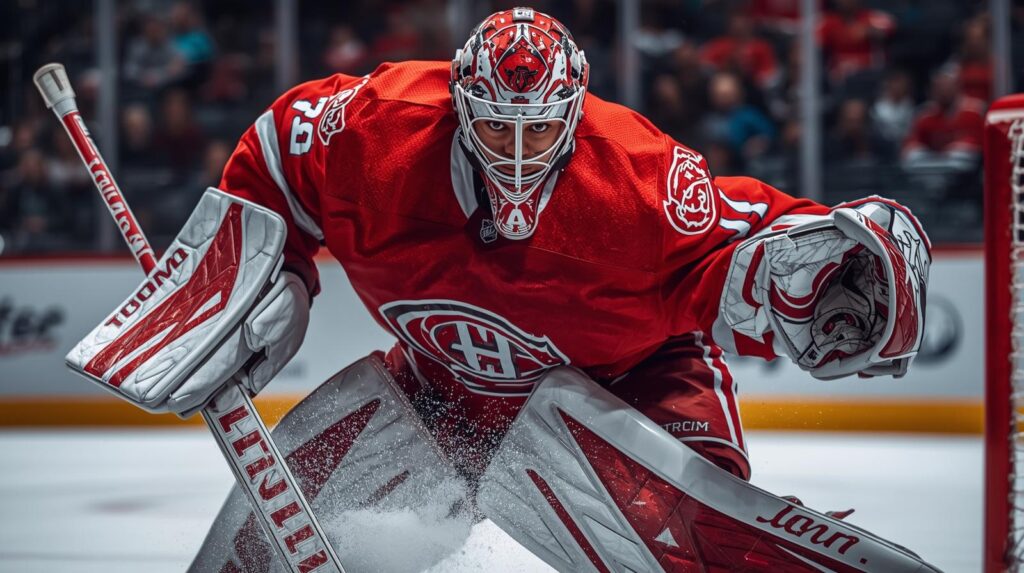
Goalie interference is when an attacking player’s actions prevent the goalie from moving freely or defending the net—through body or stick contact, by blocking a path, or by taking a position in traffic that becomes a real obstacle. Depending on the rule set and the circumstances, that can lead to a disallowed goal, a penalty for interference/goalie interference, or no call at all if the contact is considered legal and not affecting the play.
Rules and on-ice practice vary by league. In the NHL, the logic is set out in Rule 69 and is closely tied to coach’s challenges and video review. In USA Hockey, goalie interference is usually handled through the interference rules and separate provisions about actions around the goal crease, but the exact wording and procedures depend on the rulebook edition and the level of competition. In roller hockey (for example, under AAU or RHA—depending on the code), you can see wording where an attacker’s presence in the crease is allowed as long as there’s no interference with the goalie.
What Referees Look For: Impact and Who Initiated Contact
Across most commonly discussed rule sets, the officiating logic comes down to two things: did the attacker’s action affect the goalie’s ability to play the moment, and who created the contact or obstruction.
Impact shows up through specific signs: losing position for the shot, being unable to move across the crease, losing the stick, getting knocked off balance, being limited in recovering for a second effort, losing sight at the moment of the shot or rebound. Initiation is about route and choice: did the attacker skate into the goalie, did the collision come from a defender’s battle, or did the goalie’s own movement make contact almost unavoidable.
A disallowed goal and a penalty are not the same thing. A goal can be disallowed without a penalty if the interference affected the play but doesn’t look like a separate punishable act. A penalty is possible even without a goal if the attacker initiated contact with the goalie or kept interfering during the attack. The penalty scale and wording depend on the league.
Key Terms: Goal Crease, Contact, Screen, and “Reasonable Effort”
Goal crease (the crease) is the area by the net where the goalie typically gets extra protection from interference. It’s not a universal “no-go zone”: some codes allow an attacking player to be in the crease as long as it doesn’t interfere with the goalie, while other rules emphasize conditions tied to puck possession, the goalie’s position, and the nature of the contact.
Contact is any body or stick contact with the goalie. In decisions, what usually matters isn’t the mere fact that there was a touch, but what it did to the goalie’s ability to make the save.
Reasonable effort is a “reasonable attempt to avoid contact.” In North American logic, this criterion is especially visible on plays outside the crease, but in practical evaluation it’s broader: officials look at whether the player had a way not to carry the moment into a collision.
Screen is a visual obstruction. A screen as a tactical element is often allowed as long as it doesn’t turn into an obstacle to the goalie’s movement or come with contact that actually restricts the goalie.
Contact in the Crease vs. Contact Outside the Crease
Inside the goal crease, any interference more quickly becomes a real restriction—there, the goalie works in a tight space, constantly adjusts angle and depth, and even minor contact can take away one key movement. That’s why crease plays more often look like interference, but it doesn’t mean every player in the “paint” automatically makes a goal illegal: in NHL logic and in a number of other formulations, the decisive point is the impact on the ability to defend the net.
Outside the crease, there are more situations where contact can be part of the flow: the goalie comes out to cut the angle, plays the puck, or runs into traffic at the edge of the area. Here the call more often turns on whether the attacker’s path was “through the goalie” and how avoidable the collision was.
When a Defender Pushes an Attacker Into His Own Goalie
Plays where a defender pushes or knocks an attacker into the goalie are almost always analyzed through the question of initiation. In NHL Rule 69 and similar language in other codes, there’s a qualifier: if contact with the goalie occurs as a direct result of a defender’s actions, that contact isn’t necessarily treated as attacker-initiated, especially if the player tried to get out of the way or minimize the collision.
Then comes the second layer of evaluation—what happens after the contact. If the player ends up on the goalie and keeps preventing him from getting up, moving, or playing the moment, the official may stop play for control and safety, and active “continuation” of the interference can lead to a penalty even if the defender caused the initial contact.
Is There a “Three-Second Rule” for Goalie Interference?
There usually isn’t a fixed “timer” like the popular “three seconds” legend. Officials judge the player’s actions and the effect on the play: is he trying to free the goalie and clear the crease, and is his presence preventing the net from being defended. If the contact was caused by a defender, officials generally still expect the player to get out of the play at the first opportunity rather than pinning the goalie with his body or stick.
Common Goalie Interference Situations Around the Net
Net-Front Traffic and Screens
A screen in front of the net is not interference by itself. The problem starts when traffic turns into an obstacle to the goalie’s movement or comes with contact: a shove, a stick tie-up, blocking the lane with the body, “closing off” the area the goalie needs to move into for a shot or rebound. In disputed cases, officials typically look for a concrete effect: did the goalie have a free step in the needed direction, and did he see the puck at the moment of the shot.
Rebounds, Crease Scrambles, and Loose Pucks
Rebound attempts constantly sit on the edge of what’s allowed: the attacker is trying to play the puck, the defender is boxing out, the goalie is working low and preparing for a second effort. If, in trying to jam it in, the player pushes the goalie, knocks the stick loose, catches the glove, or blocks movement across the crease, it’s often seen as interference. If the contact is minimal and doesn’t affect movement or position, the decision can be softer, but it depends on the league and the specific play.
Collisions After the Shot
Here the call usually turns on path and avoidability. Sometimes momentum makes contact almost unavoidable, but when a player clearly chooses a line through the goalie or through the space the goalie needs to move into, the odds of a disallowed goal or a penalty go up. If a defender nudges the attacker into the contact point, the play is more often judged by whether the attacker had a chance to avoid the collision and whether he kept interfering with the goalie afterward.
When an Attacker Pushes a Defender Into the Defender’s Own Goalie
In North American logic, the reverse scenario is often singled out: the attacker acts on the defender in a way that sends him into his own goalie. Then the contact may be ruled attacker-initiated, and the outcome depends on how it affected the goalie’s ability to defend the net.
An Attacker in the Crease With No Obvious Contact
This is where rule codes diverge the most. NHL Rule 69 stresses that an attacker’s position inside or outside the crease should not automatically decide whether a goal counts; the key is whether he restricted the goalie. In some roller rule sets, you’ll see an even more direct allowance: being in the crease is permitted if it doesn’t interfere with or impede the goalie. USA Hockey and international rules have their own nuances in how crease situations are interpreted and what procedures apply when play is stopped, so answers without tying them to a specific rulebook often mislead.
NHL Video Review and Coach’s Challenges: What It Clarifies and What It Doesn’t
Video usually helps establish facts: where and when the contact happened, whether there was a defender’s push, the attacker’s route, the goalie’s ability to move, a lost stick, changes in stance. But the final judgment still hinges on impact—did that contact or position keep the goalie from defending the net. Slow-motion can make a touch look more significant than it was at full speed, so the decision rarely comes down to a single frame.
Why Similar Goalie Interference Plays Get Called Differently
Two plays can look the same from the stands but differ in one key detail: the goalie managed to recover and make a second effort, or he was deprived of movement, sightline, or position at the moment of the shot. The second reason is differences between rule sets and how they’re applied. The NHL operates within video review and Rule 69. USA Hockey, IIHF, and roller leagues may describe contact, crease situations, and consequences for play differently, and that shapes expectations for officiating.
NHL vs. USA Hockey vs. IIHF vs. Roller Hockey Rules
In the NHL (Rule 69), the emphasis is on impact on the goalie’s ability to defend the net and on who initiated contact. It also spells out cases where contact is caused by a defender’s actions, and it allows incidental contact outside the crease as long as there was a reasonable effort to avoid it.
In USA Hockey, goalie interference more often runs through the general interference rules and provisions about actions around the crease. The specifics depend on the rule edition and level, so it’s more accurate to check the current rulebook for your competition, especially on procedures for stopping play and the legality of a goal when an attacker is in the crease.
In roller codes (for example, AAU or RHA—depending on the edition), you can find an approach where the criteria are similar in meaning to North American logic: impact on the goalie’s ability to play the moment, initiation of contact, an avoidability assessment, and qualifiers about a defender’s shove. At the same time, some wording may directly allow an attacker to be in the crease as long as it doesn’t interfere with the goalie, and that noticeably changes officiating in traffic.
What Usually Reduces the Risk of a Disallowed Goal or a Goalie Interference Penalty
The clearest difference between “clean” traffic and a play that turns into a dispute is route and behavior after contact. When a player chooses a lane that isn’t through the goalie and, after getting tangled up, tries to clear space immediately, the official has less reason to see continued interference. When contact turns into holding the goalie, blocking his recovery, or moving “through the crease” without an attempt to avoid, the interpretation usually gets stricter regardless of where the initial contact happened.