What a Hockey Penalty Shot Really Means
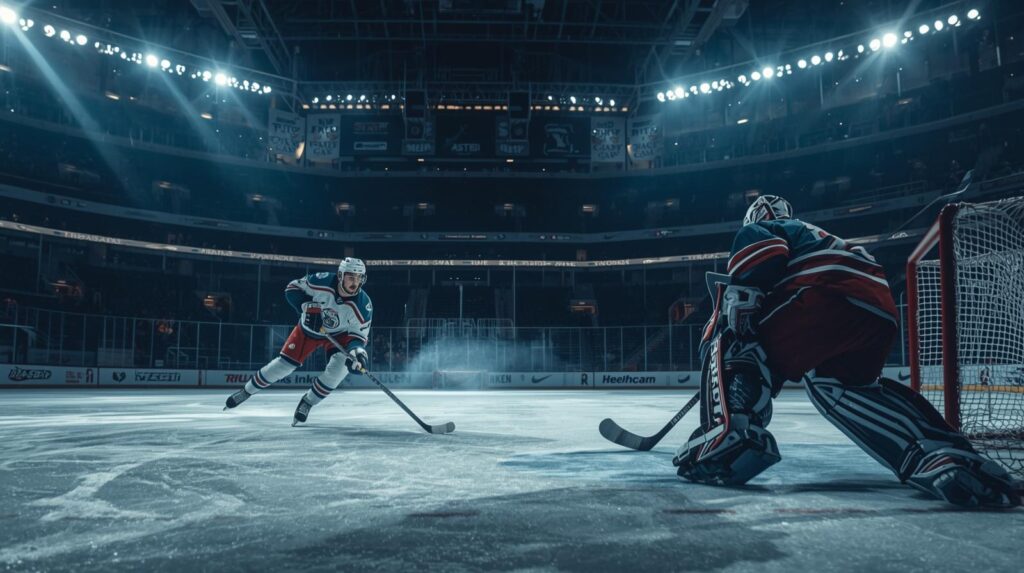
A penalty shot is a separate procedure awarded when a violation takes away a clear chance to score. In the logic of the rules, it’s not a “special shootout attempt for entertainment,” but a way to restore a scoring chance that was spoiled by an illegal action. The exact wording and some nuances depend on the rulebook (NHL, IIHF, etc.), but the idea is the same: one skater against the goalie, one attempt, with no continuation of play after the play is decided.
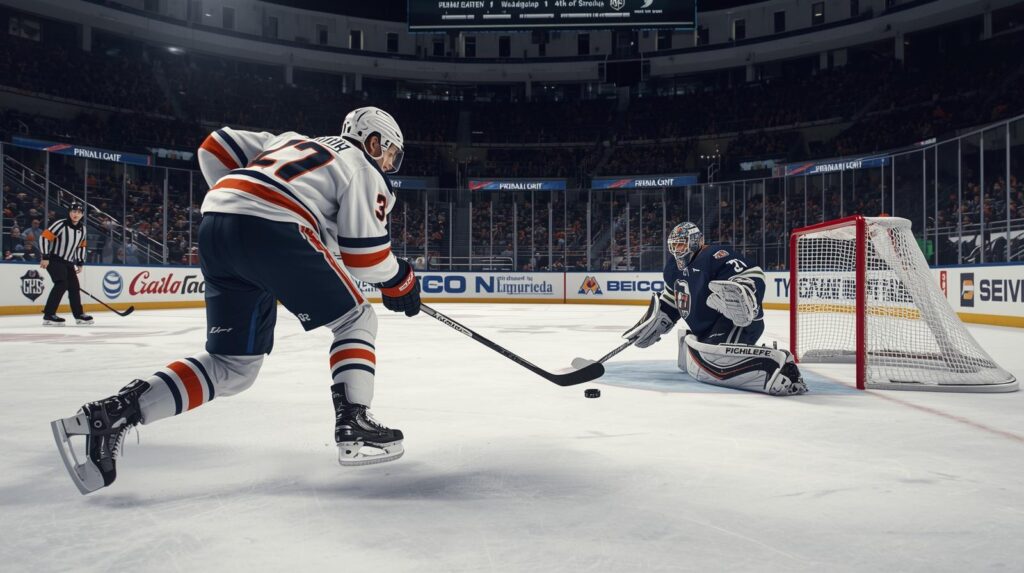
Table of Contents
- Penalty Shot vs. Shootout: What’s the Difference?
- When Is a Penalty Shot Awarded?
- Breakaway Fouls: The Most Common Penalty Shot Scenario
- Why a Penalty Shot Isn’t a Delayed Penalty
- Other Penalty Shot Situations (Not Just Breakaways)
- How a Penalty Shot Is Taken (NHL Procedure and General Rules)
- The Forward-Movement Rule on a Penalty Shot
- Rebounds on a Penalty Shot: Are They Allowed?
- Goalie Starting Position on a Penalty Shot
- Penalty Shot Moves and Dekes: What’s Allowed?
- What Happens After a Penalty Shot?
- Common Penalty Shot Questions
Penalty Shot vs. Shootout: What’s the Difference?
A penalty shot is awarded during the game as a response to a specific incident. In the NHL, the infraction that results in a penalty shot typically does not also carry the same minor penalty, because the attempt itself replaces it; other penalties from the same sequence are still possible if there were additional or separate violations.
A shootout is a regulation tiebreaker used to determine a winner when a tie isn’t allowed and overtime doesn’t produce a winner. In Russian, the word “bullit” is often used for both a penalty shot and postgame shootout attempts, but in terms of the rules these are different procedures in different contexts.
When Is a Penalty Shot Awarded?
A penalty shot comes up when two things line up: the attacking side had a real chance to finish the play with a goal, and the violation is what took that chance away. In practice, it’s an evaluation of the moment, not a mechanical “infraction X = penalty shot.” That’s why explanations and video rulebooks often use wording like clear scoring opportunity or reasonable scoring opportunity: officials compare what happened to what the rules treat as a “clear chance.”
Breakaway Fouls: The Most Common Penalty Shot Scenario
The most recognizable version is a foul on a breakaway, when the attacker has control of the puck, there’s essentially only the goalie ahead, and a defender takes away the player’s ability to finish the attack normally by committing an infraction.
The indicators you’ll see in North American logic (including NHL Rule 57) and in similar international interpretations are best read as a set of signs: the player has control of the puck or practically guaranteed possession, there are no defending players between him and the goalie who could legally intervene before the shot, and the foul genuinely cancels or noticeably worsens the chance.
If the player manages to get a shot off, that doesn’t automatically remove the penalty-shot question. Officials look at whether the scoring chance still existed in a real sense. Sometimes the shot is taken from an awkward position because of the foul, and the chance is clearly worse. Sometimes the quality doesn’t really change, and then it more often stays as a normal penalty (if applicable), without a separate attempt.
Why a Penalty Shot Isn’t a Delayed Penalty
A penalty shot doesn’t follow the logic of a classic delayed penalty, where play continues until the offending team touches the puck. If the referee sees that the conditions for a penalty shot are met and no goal is scored, play is stopped and the penalty shot is awarded.
A separate nuance is the priority of a goal. If the puck still ends up in the net despite the violation, the goal counts and the penalty shot is not awarded.
Other Penalty Shot Situations (Not Just Breakaways)
Beyond a breakaway foul, a penalty shot can come up in situations where a team loses a clear scoring chance because of actions that directly wreck the play. In North American rules (and in a number of other rulebooks with similar logic), those incidents typically include:
– throwing a stick or any object at the puck or the attacker if that prevents a clear chance to score;
– interference by a player who is not supposed to be on the ice (for example, on an illegal line change) if that ruins a breakaway.
Another group involves plays around the net. Here it’s important not to create the false impression that the goal crease is a “no-go zone.” It’s an area where the rules are especially sensitive to goaltender interference and to actions that prevent a goal. If a skater covers the puck in the crease in a way that prevents a goal, the sanction can be at its most severe. Depending on the rulebook and the referee’s assessment, that can lead to a penalty shot or an awarded goal, if the situation is treated as a prevented “certain goal” rather than just a ruined opportunity.
Another debated case is deliberately dislodging the net. In the NHL the consequences depend on the circumstances: whether the attacker had a controlled situation, how likely a goal was, and how clearly the defensive action removed that outcome. In some scenarios this points to an awarded goal; in others, to a penalty shot or a penalty.
How a Penalty Shot Is Taken (NHL Procedure and General Rules)
In the NHL, the attempt starts from center ice: the shooter is allowed to build speed and attack the net one-on-one, with no other players involved in the play. In international rules, the setup is similar, though organizational details can differ.
For the viewer, the key principle is simple: it’s a single attempt with no follow-up play, and the officials are watching not only whether the puck fully crosses the goal line, but also whether the attempt follows the logic of one continuous move.
The Forward-Movement Rule on a Penalty Shot
In retellings people often say, “the puck has to keep moving toward the net.” In practice, it’s more accurate to describe it as a ban on clear backward movement and a requirement that the attack keeps progressing toward the goal in one continuous attempt. During a deke the puck can be held on the blade, but if the player starts pulling it back, turns the play in the opposite direction, or clearly breaks the forward progression, the attempt is stopped.
At the same time, the simplification “once you shoot, it’s over” is also wrong. The shooter can make multiple touches and moves before the final shot, and it’s still one attempt. The end is determined by the obvious outcome of the play: a goal, a save with a freeze/stop, the puck going away in a way that makes continuing within the “forward” requirement impossible, or a loss of control that makes a realistic continuation of the attempt impossible.
Rebounds on a Penalty Shot: Are They Allowed?
A penalty shot doesn’t turn into normal offense even when the puck rebounds off the goalie or the post. There are no rebounds: other players don’t join the play, and the shooter doesn’t get a second phase of the attack.
But a deflection doesn’t cancel a goal by itself. If the puck changes direction off the goalie or the post after the shooter’s action and still completely crosses the goal line, it can count as a goal as part of the same attempt.
Goalie Starting Position on a Penalty Shot
In the NHL, the goalie’s starting reference is the goal line: the goalie must start on the goal line and, until the attacker touches the puck, is not allowed to be in front of it. After the touch, the attempt is considered started, and the goalie acts within normal technique.
In other rulebooks the wording can differ, but the idea is the same: you can’t gain an advantage by violating the starting position. If a goalie’s procedural violation affects the outcome, a re-take is possible.
Penalty Shot Moves and Dekes: What’s Allowed?
In discussions of penalty shots, people often try to reduce everything to an “allowed vs. banned” list. In reality, the main limiter isn’t the name of a move, but whether the attempt turns into carrying the puck without a shot or into backward movement.
Lifting the puck onto the blade and trying to carry it in can be interpreted differently depending on the league and on whether the official considers it a shot or a carry. So it’s more accurate to put it this way: certain moves can be ruled illegal if they break the requirement of continuous forward progress or turn the attempt into a carry.
Separately, in the NHL there’s a well-known ban on the spin-o-rama (a full 360° turn) in the penalty shot/shootout context: it often conflicts with the continuous-forward-movement requirement. At the same time, body turns and partial rotations aren’t prohibited by themselves—the issue is the full circle and how the puck is moving.
What Happens After a Penalty Shot?
If the puck goes in, it’s a goal, and play resumes with a faceoff at center ice.
If there’s no goal, in the NHL and in most international rulebooks play also restarts with a center-ice faceoff: a penalty shot is a separate closed procedure that isn’t meant to turn into set offense with a faceoff in the zone.
Common Penalty Shot Questions
He got a shot off—why did they still award a penalty shot? Officials evaluate not the fact of a shot, but how much the violation changed the quality of the chance and took away a clear opportunity to score.
A defender was nearby—how is that a breakaway? What matters isn’t the “eye-test” distance, but whether the defender had a real chance to legally intervene before the shot and whether he was between the attacker and the goalie.
Why didn’t they let it play out like a delayed penalty? Because a penalty shot isn’t the standard delayed-penalty procedure: if the conditions are met and no goal is scored, play is stopped and the attempt is awarded.