Zones Explained: Offensive, Defensive, Neutral
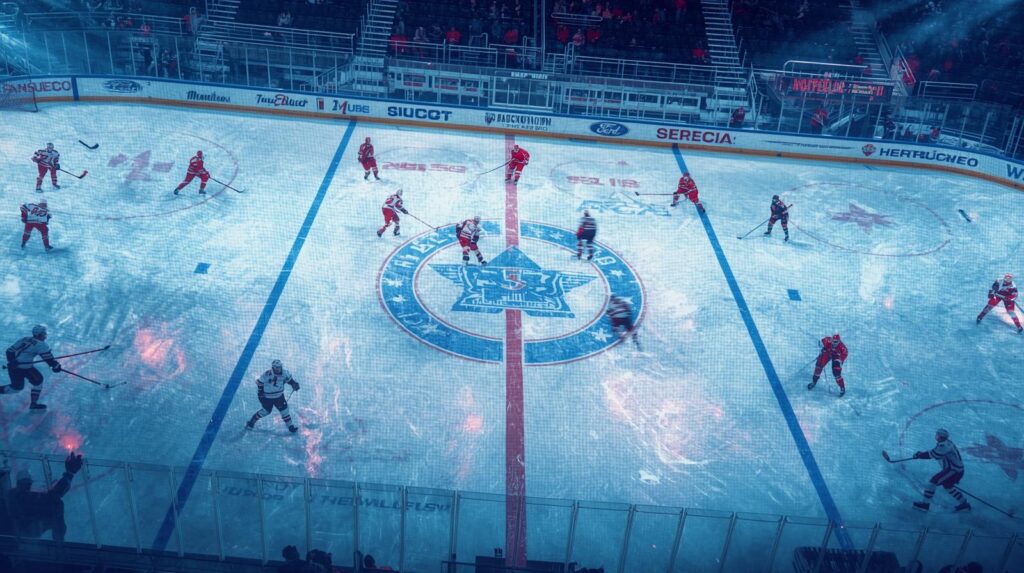
Hockey is easier to read when you see it as a game of space. The division of the rink into zones isn’t decorative markings: it affects offside and the logic of zone entries, the nature of pressure without the puck, the quality of transitions, and why some teams consistently create attacks “with pace” while others are more often forced to dump the puck in and defend.
Table of Contents
- Hockey zones explained: where the offensive zone, defensive zone, and neutral zone are
- Offensive zone in hockey: how pressure turns into scoring chances
- Defensive zone in hockey: the slot, the perimeter, and net-front coverage
- Neutral zone in hockey: how the space between the blue lines shapes the game
- Zone entries: controlled entry vs dump-in
- Neutral zone trap in hockey: 1–3–1, 1–4, and 1–2–2
- Forecheck in hockey: how offensive-zone pressure connects to neutral-zone structure
- Offside and the blue line in hockey: where zones turn into a rule
- Why neutral-zone data often looks more repeatable
- FAQ: common questions about offensive zone, defensive zone, and neutral zone in hockey
Hockey zones explained: where the offensive zone, defensive zone, and neutral zone are
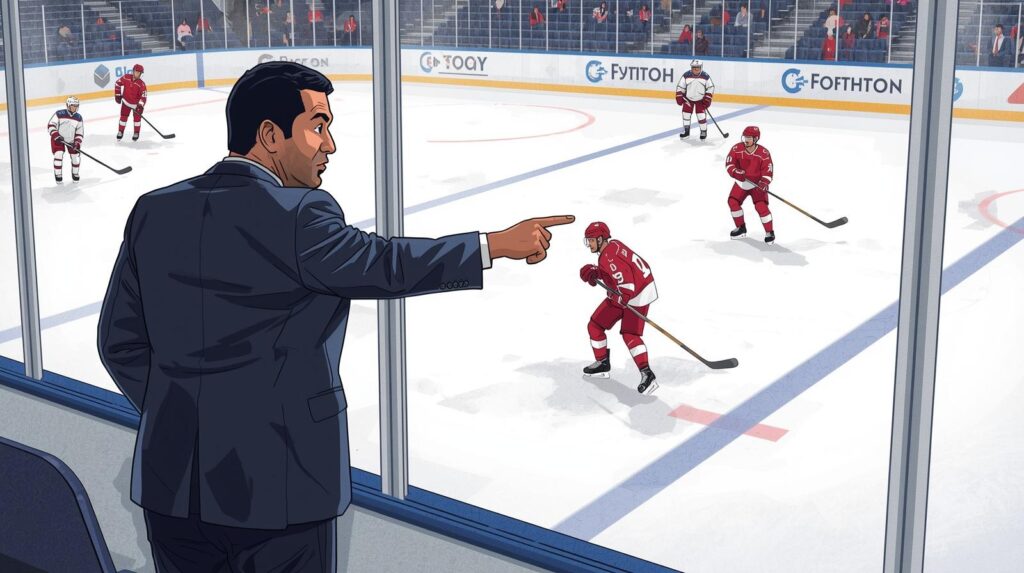
Zone boundaries are set by the two blue lines. The neutral zone is the space between them. The offensive zone is the area beyond the opponent’s blue line toward their net. The defensive zone is the area beyond your own blue line toward your net.
The basic geography is the same across leagues, but the details of rule application depend on the rulebook: how exactly a player’s position relative to the blue line is judged, how offside is waved off via exiting the zone (tag-up), and what the parameters are for video review and coach’s challenges. In the NHL, these procedures are standardized and very visible; in IIHF competitions and other leagues, the approach can differ.
At the same time, “playing in a zone” doesn’t always equal possession. A team can be in the offensive zone and defending after a turnover, or it can control tempo through the neutral zone and line changes while barely settling in near the opponent’s net.
Offensive zone in hockey: how pressure turns into scoring chances
The offensive zone is where an entry turns into pressure, shots, and second chances. A good attack rarely comes down to the idea of “just shoot more.” What matters much more is how consistently a team creates traffic in front of the goalie, takes away sightlines, gets to loose pucks, and forces the defense to shift with puck movement from side to side.
The quality of a team’s offensive-zone game shows up in what happens immediately after a turnover. A mistake at the top of the zone or near the opponent’s blue line often hands the opponent a lane for a quick breakout, especially if the defensemen are high and back support hasn’t reacted in time. That’s why aggressive pressure almost always lives alongside layers of coverage: who seals the middle, who takes away the likely first pass, who stays as the “third” player to prevent a counterattack through the seam.
Defensive zone in hockey: the slot, the perimeter, and net-front coverage
The defensive zone is where the cost of a mistake is higher: dangerous passes and shots happen closer to the net, and there’s less time to recover. Defense here is simultaneously work on the slot (the middle of the zone), the perimeter, and the space in front of the goalie.
People often talk about choosing “protect the slot or protect the perimeter,” but in practice it’s not an either/or switch. The emphasis shifts depending on how the opponent attacks: whether it builds through point shots with traffic, regularly moves the puck to the back post, cuts inside via passes into the middle, how dangerous its defensemen are at the line, and how quickly it changes the side of attack.
One especially sensitive area is the space around the net and goalie-interference plays. The goal crease (“the paint”) isn’t simply a place you “can’t skate into.” In most interpretations, the key question is whether the attacker prevented the goalie from playing the moment: was there contact, was there a screen, did boxing-out occur, could the player have avoided it, who initiated the collision. The attacker’s position relative to the crease can also be a factor in the review, but on its own it rarely decides the play without context. Between leagues—and even between seasons within the same league—the details of interpretation can differ.
Neutral zone in hockey: how the space between the blue lines shapes the game
The neutral zone often determines how a team will enter the opponent’s zone—with control and speed, or via a forced dump-in. This is where gaps appear, 2-on-1s happen, change-related interceptions occur, and counterattacks that look “too easy” are born: the puck moves through the middle of the rink quickly, and the defense doesn’t have time to set.
This zone became a separate topic in analytics because traditional shot-based metrics do a worse job of seeing the difference between teams that consistently carry the puck to controlled entries and teams that more often give up possession right at the blue line.
Zone entries: controlled entry vs dump-in
The key event for describing the neutral zone is the zone entry attempt. Typically, two types are distinguished.
A controlled entry is an entry with control: a carry-in (skating it in on the stick) or a pass-in (entering off a pass) while retaining possession at the line. An uncontrolled entry is a dump or chip: dump-in, chip-in, tip-in—when the puck is sent into the zone without guaranteed control, and the battle starts after that.
In public analytics, the conclusion is usually the same: controlled entries, on average, lead to more offensive continuations and more shot activity than dump-ins. The exact ratios depend on the tracking methodology, the season, and the league, so it’s more accurate to treat this as a stable tendency rather than a universal “one-size-fits-all formula.”
That doesn’t make dump-and-chase a mistake by definition. A dump can be the best decision because of a line change, tight pressure at the blue line, the risk of a turnover through the middle, or the context of a particular shift. The difference is that as a dominant entry method, dumping the puck in tends, on average, to limit attack quality more than teams that regularly enter with control and keep the puck after crossing the blue line.
Neutral zone trap in hockey: 1–3–1, 1–4, and 1–2–2
The neutral zone trap is often called “passive defense,” but in essence it’s a way to manage lanes and tempo: take away central corridors, force the opponent toward the boards, and nudge it toward a dump-in instead of a comfortable carry-in.
A 1–3–1 is usually described like this: one player confronts the puck carrier or closes a direction, three line up across to cut off support and lanes, and one stays deeper as insurance. In real play, roles move and change, but the idea remains the same: remove the direct path through the middle and make the opponent’s decision more predictable.
A 1–4 emphasizes density closer to your own blue line: four players form a barrier, making a controlled entry harder. The cost of that density is the demand for discipline and reaction speed: if the opponent does get through the first line with pace, the sequence becomes dangerous quickly.
A 1–2–2 shows up in more aggressive and more conservative versions—depending on where exactly a team starts its pressure and how willing it is to risk for an interception. The same label on different teams can mean different emphases in depth and intensity, so what matters more than the name is which lanes the structure takes away and where it tries to win the puck.
Forecheck in hockey: how offensive-zone pressure connects to neutral-zone structure
Forecheck is pressure in the offensive zone, when a team without the puck tries to regain possession as high up the ice as possible. An aggressive forecheck increases the chance of winning the puck back quickly, but it also raises the cost of a mistake: if the opponent escapes pressure through the middle or with a quick first pass, the neutral zone turns into transit and the defensemen have to turn and defend at speed.
More conservative forecheck variations are more often aimed not at an immediate takeaway, but at steering the opponent into a predictable exit and meeting it in the neutral zone with prepared structure and angles.
Offside and the blue line in hockey: where zones turn into a rule
Offside is tied to the blue line: the order in which players and the puck cross the line determines whether an entry is legal. The nuances depend on the specific rulebook: what counts as a player being “in the zone/out of the zone,” how tag-up is applied, and whether video review is allowed and within what limits. In the NHL, offside reviews on scoring plays have become part of everyday practice; in IIHF competitions and other leagues, procedures may be set up differently.
Why neutral-zone data often looks more repeatable
An observation from analytics is pragmatic: neutral-zone events—entries, exits, and their types—often describe more repeatable elements of possession and transition than metrics that depend more heavily on finishing, bounces, and goaltending quality in a given game.
That doesn’t make the offensive zone and defensive zone secondary. Goals are scored and prevented there. But the neutral zone often explains why one team, time after time, gets more favorable conditions to attack and is less often forced into a full sprint back.
FAQ: common questions about offensive zone, defensive zone, and neutral zone in hockey
What is the neutral zone in hockey?
The space between the two blue lines. Almost all exits from your own zone and entries into the opponent’s zone pass through it.
How is a controlled entry different from a dump-in?
A controlled entry is entering while keeping control of the puck at the line (a carry-in or pass-in). A dump-in is sending the puck into the zone without guaranteed possession, after which you have to win a battle to regain control.
Is the neutral zone more important than offense and defense?
It often determines transition quality and the type of zone entry, which affects how many attacks a team creates and how many dangerous responses it gives up. But the decisive moments still happen in the offensive zone and defensive zone—the zones work as a connected system.
Why do the same structures look different on the ice?
A structure sets roles and reference points, but distances and angles change because of speed, line changes, the opponent’s breakout style, the score, the personnel on the ice, and the context of a particular shift. Even within the same league, the same structure name can imply different emphases.