Hockey Goalie Equipment Rules: Pads, Masks, and Limits
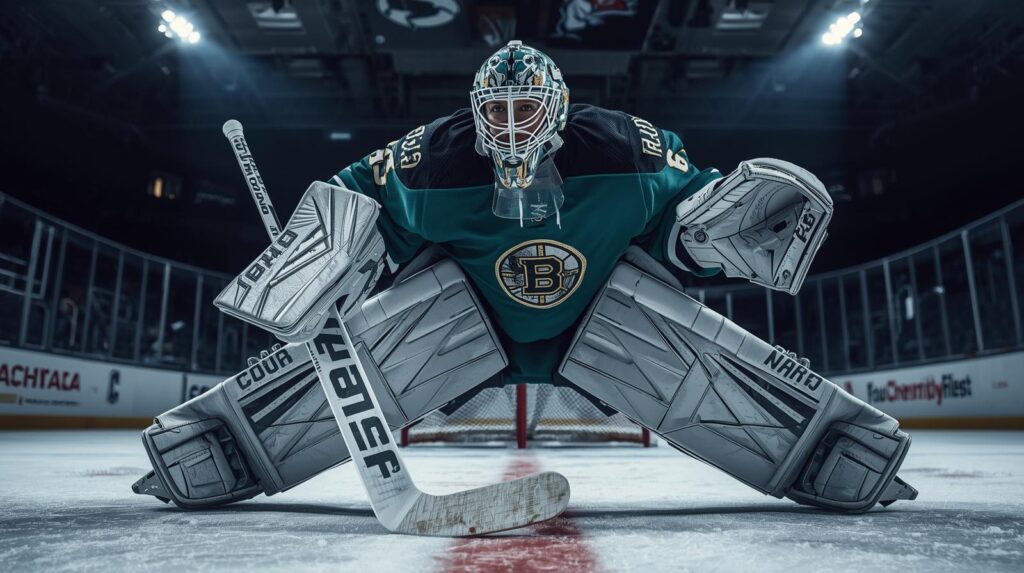
Goaltender equipment is regulated more strictly than skaters’ gear: it’s responsible for safety and it affects the game’s “geometry” — how much space the goalie can cover. There’s almost no universal standard: details depend on the rule set (USA Hockey, NFHS high school rules, IIHF international tournaments), as well as the age category and the season.
Table of Contents
- Which rules apply: USA Hockey, NFHS, or IIHF
- “Protection, not advantage”: the core principle (USA Hockey Rule 303)
- Required goalie gear and where rulebooks most often differ
- Goalie mask and helmet rules: HECC certification and “cat-eye” cages (USA Hockey Casebook)
- Neck and throat protection rules: neck laceration protector vs throat protector
- When play is stopped for goalie equipment issues: an NFHS-specific approach
- Goalie glove rules: size limits and the “cheater bar” (USA Hockey Rule 303)
- Goalie pad rules: measurements, boot channel, and how equipment is worn (USA Hockey Rule 303 + Casebook)
- Goalie pants and chest protector rules: ridges, padding, and the “functional stance” test (USA Hockey Rule 303)
- Goalie equipment measurement requests: penalties and procedure (USA Hockey Rule 303 + Casebook)
- What happens after illegal goaltender equipment is found (USA Hockey Casebook)
- What most often makes goalie equipment illegal
Which rules apply: USA Hockey, NFHS, or IIHF
In the U.S., two different contexts are most common. USA Hockey is the broad, nationwide rule set with detailed limits on dimensions and construction (Rule 303) and a separate Casebook that collects interpretations and game situations. NFHS is high school hockey, where some requirements are worded differently and certain equipment elements are tied more rigidly to safety requirements.
The international reference point is the IIHF. Measurements and requirements for goaltender equipment there are set out in a separate document (Goaltender Measurement Standards), written in a fair-play framework and supplementing the Rule Book. The standards include a general caveat: if there is an abuse of the “spirit of the rules,” the equipment can be deemed unfit for play pending further decision. How oversight works in practice is usually determined by the specific tournament regulations and the authority of the officials.
“Protection, not advantage”: the core principle (USA Hockey Rule 303)
In USA Hockey, the core logic is stated plainly: other than skates and the stick, everything on the goaltender must be made solely for protection, and you can’t use elements that provide undue assistance — unfair help when defending the goal (Rule 303(a)).
The Casebook shows how this is applied. An overly “baggy” jersey isn’t automatically illegal by itself, but it can become a violation if it’s obvious it’s worn or built to add coverage area through “sail-like” looseness (Situation 1). The criterion isn’t aesthetic, but functional: does it create a real advantage.
Required goalie gear and where rulebooks most often differ
The list of items is generally similar almost everywhere: head and face protection, neck and throat protection (depending on the rules), chest and arm protection, pants and pelvic protection, groin protection, leg pads, catcher and blocker, skates, and a stick.
Differences usually show up in three places: helmet/mask certification, requirements for neck and throat protection, and the interpretation of what can be considered a substitute for what.
In NFHS (2024–25 changes), it’s specifically emphasized that the goaltender must have a neck laceration protector and a flapper-style throat protector as separate elements; the throat protector must be attached to the helmet or mask and used without modifications, in accordance with the manufacturer’s intended use (Rule 3-3-1 change).
Goalie mask and helmet rules: HECC certification and “cat-eye” cages (USA Hockey Casebook)
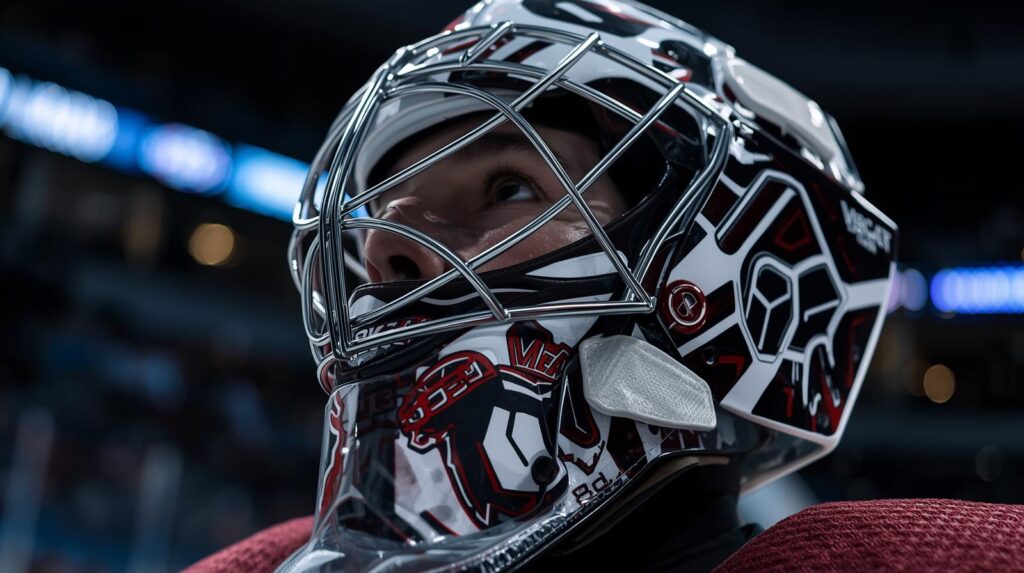
In USA Hockey, a helmet and full face mask are mandatory for goaltenders (Rule 303(b)). The Casebook clarifies how this is applied by category.
In Youth, High School, and Girls’, HECC-certified helmet and mask (or combined HECC-certified headgear) are required — Situation 3. In Adult, the Casebook states that a hockey helmet and full face mask are required; a separate HECC requirement does not apply there, but form-fitted masks are prohibited — also Situation 3. Some leagues or tournaments within Adult occasionally add extra restrictions, so checking the rules of a specific competition remains a practical habit.
The “cat-eye” issue is often reduced to the look of the cage, but the Casebook’s logic is different. For Youth/HS/Girls’, “cat-eye” is allowed if the mask is HECC-certified (Situation 4). What matters isn’t the visual impression, but the opening dimensions that allow the mask to pass certification.
The Casebook also notes an inconvenient but straightforward point: if a team has two goaltenders with illegal masks, that’s not a reason to “look the other way.” The options it describes are to use legal headgear from another player or to continue the game without a goalie (Situation 2).
Neck and throat protection rules: neck laceration protector vs throat protector
USA Hockey makes a neck laceration protector mandatory for all categories except Adult (for Adult it’s strongly recommended) and separately notes that hanging throat protectors are recommended, but do not replace cut-resistant protection (Rule 303(b)).
The Casebook puts this as directly as possible: hanging plastic throat protectors are not classified as neck laceration protectors and do not satisfy the cut-protection requirement (Situation 5).
There’s also a transitional nuance on markings: for Youth, Girls, and High School, BNQ-certified neck protection is permitted in the 2025–26 and 2026–27 seasons even without an HECC stamp (Casebook “NEW – Situation 6”). This is a temporary allowance tied to those categories.
NFHS in the 2024–25 version goes stricter: the goaltender must have both a neck laceration protector and a flapper-style throat protector as separate elements, without modifications, with the throat protector attached to the helmet/mask (Rule 3-3-1 change).
When play is stopped for goalie equipment issues: an NFHS-specific approach
In NFHS (Rule 3-3-5 change), an expanded list of cases is given where play must be stopped immediately: if the goaltender’s mask, helmet, neck laceration protector, flapper-style throat protector, or gloves are displaced, and also if a skate blade is broken/displaced. This is specific to NFHS; in other rule sets, the list of items requiring an immediate stoppage may be different and is often more tightly tied to the helmet/mask and the skate.
Goalie glove rules: size limits and the “cheater bar” (USA Hockey Rule 303)
USA Hockey Rule 303(c) sets measurable limits for the catcher and blocker. The point of these rules isn’t to “punish shape,” but to shut down ways to artificially increase blocking area.
A note to 303(c) specifically addresses the “cheater bar”: the bridge between the cuff and the thumb may run only in a straight line; any additional lacing, webbing, or added material makes the glove illegal. The Casebook adds an example: if an attachment between the thumb and the wrist isn’t needed for the catching function and is done to increase blocking area, it falls under the undue assistance prohibition (Situation 7).
Goalie pad rules: measurements, boot channel, and how equipment is worn (USA Hockey Rule 303 + Casebook)
USA Hockey Rule 303(d) sets detailed limits on pad width and length, boot channel requirements (flat or concave, with no add-ons like a puck foil), the thickness of calf protectors and the knee strap pad, and requirements for thigh pads. The logic is the same: prevent protection from turning into a “construction kit” for increasing coverage.
The Casebook shows that in practice it’s not only millimeters that matter, but also how an element is worn. The knee strap pad can’t be worn so loosely that it widens the pad and “splits” in the five-hole area (Situation 9). The thigh pad must not hang loose and close the five-hole in the butterfly; if the referee sees an issue, they require it to be corrected before play continues. Acceptable options are a snug fit along the leg’s contour or placement under the pants (Situation 10).
At the same time, the Casebook includes a caveat for youth models: if small pads don’t have a pronounced boot channel and are flat along their length, that can be an acceptable reasonable deviation that doesn’t violate the intent of the limits (Situation 8).
Goalie pants and chest protector rules: ridges, padding, and the “functional stance” test (USA Hockey Rule 303)
Rule 303(e) prohibits internal and external “cheater” padding on pant legs or the waist beyond what’s necessary for protection, and separately prohibits external abdominal “aprons” hanging down onto the thighs.
Rule 303(f) prohibits raised ridges on key areas of the chest/arm protector, limits elbow reinforcement to the specified dimensions, and tightly restricts protruding elements on the shoulders/collarbones.
It also establishes a “functional position” criterion: if, in a normal crouch, the shoulder protection is pushed above the natural contour of the shoulder, the chest protector is considered illegal. This is a formal USA Hockey test, not a “referee’s feel.”
Goalie equipment measurement requests: penalties and procedure (USA Hockey Rule 303 + Casebook)
USA Hockey Rule 303(g) states that a goaltender with illegal equipment receives a minor. Measurement is conducted immediately upon a request by the captain. If the request is not upheld, the team requesting the measurement receives a bench minor for delay of game.
The Casebook adds practical details. Before measurement, you can’t “fix up” the pads, for example by removing tape: they measure them as they were used in the game (Situation 12). The thigh pad can also be subject to measurement; the request must be specific about what exactly is being checked (Situation 13). In terms of tools, a regular flexible tape measure is acceptable, even if special gauges are used in some places (Situation 16). There’s also a clarification on the bench minor for an unsuccessful request: it applies to all equipment except the mouthpiece (Situation 17).
What happens after illegal goaltender equipment is found (USA Hockey Casebook)
The Casebook describes the consequences in a way that prevents the game from turning into a long stoppage. If a goaltender is penalized for oversized pads or other illegal equipment, they can’t continue playing with it in the same condition: the equipment must be replaced or brought into compliance (Situation 14). No extra time is given to change; play continues with the backup/temporary goalie or with another player under the procedure (Situation 15, with reference to Rule 309(b)).
What most often makes goalie equipment illegal
Problems are usually caused not by the “factory,” but by modifications that increase coverage area: bridges and “pockets” on the catcher, thick layers of tape along the pad edge, add-ons in the boot channel area, ridge-like padding on pants, protruding shoulder elements on the chest protector. In USA Hockey, this most often comes down to the undue assistance ban and measurable limits. In NFHS, a separate ban is added on modifying neck/throat protection elements — in the 2024–25 rules edition.