Icing in Hockey: What Really Matters
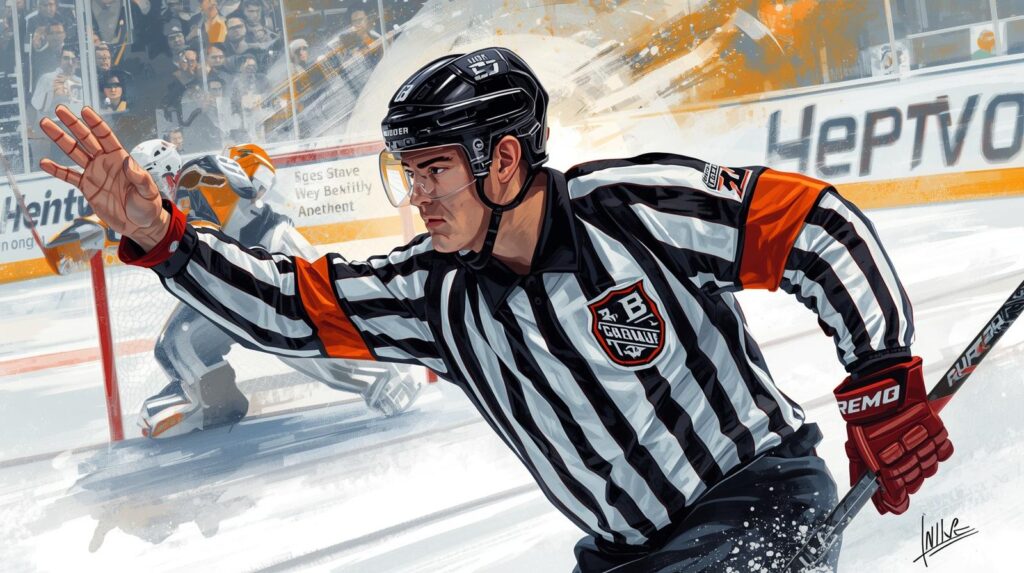
Icing is easy to recognize by the linesman’s raised arm: the puck goes deep, players accelerate, and then one of two things happens — a whistle or play continues. The difference usually isn’t the “ref’s mood,” but which version of the rule is used in a given league (touch, automatic/no-touch, hybrid) and whether something occurred along the way that nullifies icing.
Table of Contents
- What is icing in hockey?
- Rink lines and markings that matter for icing
- How linesmen call icing during a game
- Types of icing in hockey: touch, no-touch (automatic), and hybrid
- When icing is waved off: common exceptions
- What happens after icing?
- Why icing is called sometimes and not other times
- The tactical side of icing
- NHL vs IIHF vs USA Hockey: where icing rules commonly differ
What is icing in hockey?
In most modern rule systems, icing is tied to a long dump-in: the puck is played from a team’s own half relative to the center red line, it travels through the neutral zone, and it fully crosses the opponent’s goal line with no goal scored. What matters next isn’t the distance itself, but whether the sequence becomes a stoppage. In automatic/no-touch icing, the stoppage is usually tied to the puck crossing the goal line, while in touch and hybrid it depends on additional conditions.
In terms of effect, the outcome is almost the same everywhere: play comes back for a faceoff in the zone of the team that sent the puck for icing. It’s not a penalty and there are no “penalty minutes,” but positionally the rule punishes it in a meaningful way.
Rink lines and markings that matter for icing
For icing, the key reference points are the center red line and the goal line.
The center red line sets the logic of “where the puck was played from.” In the North American model and in many other rule sets, icing is tied to the puck being sent from a team’s own half and traveling the full length of the rink to the opponent’s goal line, but the exact wording and exceptions differ between the NHL, IIHF, and national federations.
The goal line is the red line along the end boards where the goal posts sit. In automatic/no-touch icing, the whistle is typically blown when the puck fully crosses that line, provided nothing has happened to cancel icing. In touch icing and hybrid icing, the goal line remains an important boundary for the play, but the moment of the stoppage is determined by a different procedure.
Another nuance that regularly comes up in arguments: visually it can seem like “where the player was” is what matters, but in officiating logic the decisive factor is more often the location of the last playing action on the puck that led to the dump-in, not whether a skater crossed center with their body or stick.
How linesmen call icing during a game
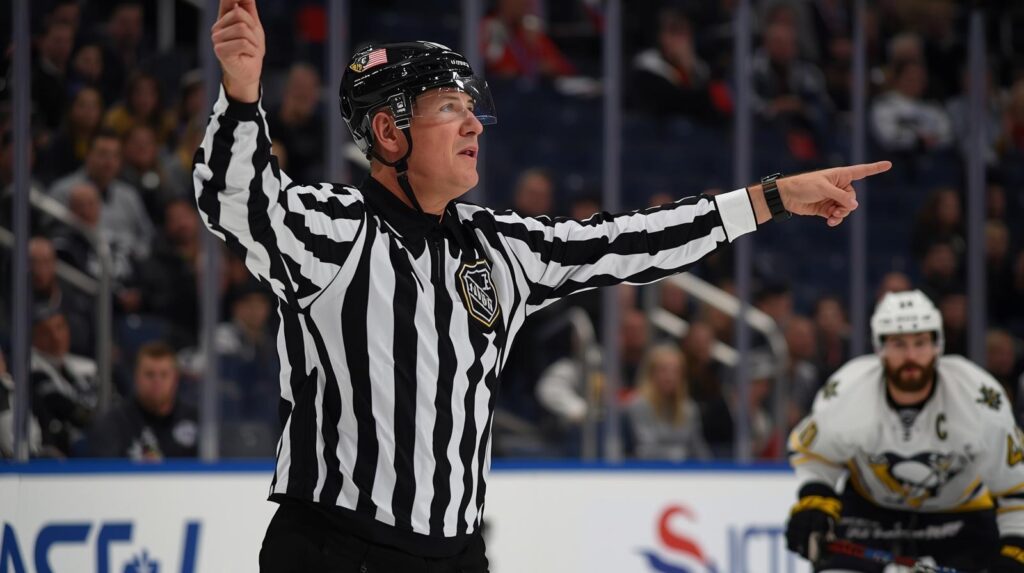
A linesman’s raised arm signals potential icing. It’s an indication that the play is heading toward icing if the rest of the conditions line up.
Why might there be no whistle even though the puck went past the goal line? There are two common reasons. The first is the hybrid icing mechanism: the decision depends on who, in the linesman’s judgment, is winning the race to the reference point in the attacking zone (in practice, to the line they mentally draw through the far faceoff dots). The second is a washout during the sequence: the puck was touched before the goal line, the opposing skater had an opportunity to play it, the goalie got involved, or another league-specific exception in the rulebook applied.
Types of icing in hockey: touch, no-touch (automatic), and hybrid
The difference between icing types is when, exactly, the play becomes a stoppage and how closely it’s tied to a race to the puck.
Touch icing
The whistle is blown when a defending team skater (not the goalie) is the first to touch the puck after the dump-in. If the goalie touches it first, or if a player from the team that dumped it in gets there first, icing is typically waved off and play continues. It’s precisely because of high-speed races into the end boards that many leagues have moved over time to less risky options.
No-touch (automatic) icing
The stoppage happens without a race: as a rule, when the puck fully crosses the opponent’s goal line, assuming there’s no reason to wave icing off. This version is common in amateur and youth competition; it’s also used at the pro level, but the specifics depend on the country, league, and season.
Hybrid icing
This model is used in the NHL and a number of other leagues. The linesman makes the decision before a dangerous collision at the boards: if the defending player is clearly winning the race to the reference point, icing is called; if the attacking player gets there first, icing is waved off and play continues. There’s inevitably an element of officiating judgment here, because what’s being evaluated is the dynamic of the play, not a touch at the boards.
When icing is waved off: common exceptions
The reasons for waving off icing are similar in concept across rule sets, but they differ in wording and details. That’s why it’s more accurate to treat them as a set of typical situations rather than a universal same list for every league.
Opportunity to play the puck before the goal line
If the linesman believes an opposing skater had a real opportunity to play the puck before it fully crossed the goal line but didn’t, icing can be waved off. Some rules describe this as a reasonable opportunity to play the puck, while others stress that a player must not deliberately avoid playing it. At game speed, this is one of the most disputed areas because the decision is evaluative.
Touch by an opponent before the puck crosses the goal line
If, before the goal line, the puck touches an opponent’s stick, skate, or body, icing is usually waved off. The logic is simple: the puck has been affected by the other side’s playing action and is no longer a clean, unanswered dump-in.
Deflection off the opponent
If the puck changes direction after contact with the team that would potentially benefit from the stoppage, icing is most often waved off. This framing is usually more precise than trying to tie it to the words attack/defense in the moment: during possession changes, roles can shift, while the logic of the exception stays the same.
Goalie involvement
The popular line the goalie came out — icing is off is too crude. In different rulebooks, what matters more is whether the goalie played the puck or made it clearly available to be played. This isn’t about a forbidden zone, but about the fact that goalie involvement changes the meaning of the sequence and the need for a stoppage.
Goal
If the puck legally crosses the goal line inside the net, that’s a goal, not icing.
Shorthanded icing (allowed while killing a penalty)
Whether shorthanded icing is allowed depends on the rule system. In the NHL and in many North American leagues, this exception traditionally applies. In some youth and amateur rule sets it may be restricted by age/category or not exist, so it matters fundamentally which rules govern the specific game.
Faceoff-related situations
Some rulebooks include exceptions tied to how the puck was propelled forward directly during play off a faceoff. This isn’t a universal rule that icing can’t happen after a faceoff: the interpretation depends on the exact language in a league’s rulebook.
What happens after icing?
After icing, play stops and the faceoff is held in the defensive zone of the team that committed the icing. In a number of leagues (including the NHL) there’s an additional consequence: the team that iced the puck cannot make a line change before the faceoff, although exceptions and procedural details are set by the rulebook.
Sometimes it seems to spectators like they put the faceoff at a weird spot. Usually the reason is that the stoppage may have resulted from a combination of procedural nuances: a simultaneous stoppage for another reason, the application of an exception, or an officiating error for which the rules separately specify where play is resumed. Without tying it to a specific rule set, it’s more accurate to treat these as a procedural ruling under the rulebook, not as a separate type of icing.
Why icing is called sometimes and not other times
Visually, two plays can look identical, but the ruling will differ because of details.
Hybrid icing adds a race evaluation: in one moment the defender is objectively closer and in control — there will be a whistle; in another the attacker accelerates more sharply and wins the space — icing will be waved off. The opportunity to play the puck washout is often the hardest to accept: a player was expecting a stoppage, but the linesman decided the puck could have been played before the goal line and kept the moment live.
The tactical side of icing
Icing is a tool for managing risk under pressure. In its own end, a team will often choose the safest option: send the puck deep rather than force a short pass through a dangerous area and hand the opponent a shot from a strong position. The cost is a defensive-zone faceoff and, in some leagues, the inability to change a tired unit.
For the attacking side, icing is a chance to get set: an offensive-zone faceoff and an opportunity to reapply pressure immediately, especially when the opponent is limited in making changes. At this level, icing isn’t a technical mistake, but a decision with clear consequences for tempo and territorial control.
The goalie also affects icing frequency: confident puckhandling and timely actions can turn potential icing into continued attack. Exactly how goalie involvement affects the officials’ decision is determined by the specific language of a given rulebook, but the overall logic is the same — active puck play reduces the number of forced stoppages.
NHL vs IIHF vs USA Hockey: where icing rules commonly differ
In practice, three things most often differ: which icing type is used (hybrid versus no-touch), whether the shorthanded exception applies, and what procedural consequences follow the stoppage (including line-change rules). Even within the same country, these parameters can vary by competition level and age category, so the most reliable reference is the current rulebook of the specific league or tournament.