Costly Seconds: How Hockey Line Changes Really Work
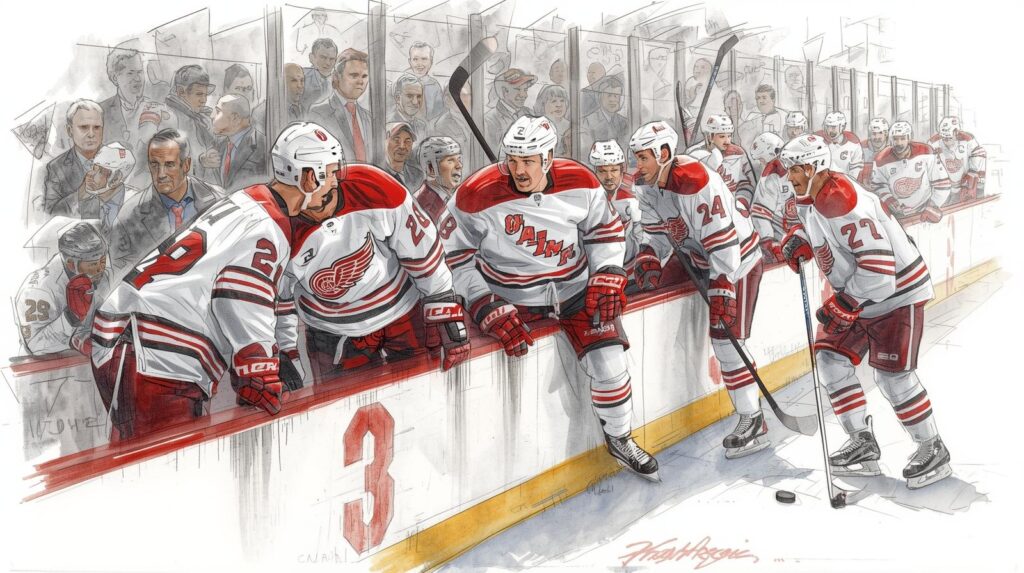
Line changes are one of hockey’s mechanisms that’s easy to miss while watching, but they directly affect pace, defensive quality, and the cost of mistakes. Because of the sport’s intensity and constant possession swings, players rarely stay on the ice for long stretches without refreshing the personnel: fresh legs in hockey aren’t a “comfort” thing, they’re part of the system.
Table of Contents
- What is a line change? (And what a “shift” actually means)
- Who decides line changes: the coach or the players?
- Types of line changes in hockey: stoppage changes, on-the-fly changes, and the long change
- How long is a hockey shift? How players know it’s time to change
- How on-the-fly changes work in real game flow
- Too many men on the ice: what actually counts as a penalty
- Bench management: why line change “logistics” matter
- Line changes after stoppages: icing and the home team’s last change
- Why line changes matter tactically: matchups, tempo, and vulnerable seconds
- Common line change mistakes that lead to goals or penalties
- Line changes in special situations: pinned in-zone, penalty kill, and 6-on-5
What is a line change? (And what a “shift” actually means)
Two terms live side by side in hockey language and are easy to mix up. A shift is the stretch of time a specific player is on the ice. A line change is the substitution event: the moment one player goes to the bench and another comes out in his place.
A “line” usually means a trio of forwards (left wing — center — right wing) who often go out together. Defensemen more often work in pairs and change as a pair, although in live play “mixed” pairings can happen for a few seconds: the pace of the sequence and mismatched timing make perfect synchronization more of a goal than a guarantee.
Who decides line changes: the coach or the players?
Rotation in hockey is a mix of plan and improvisation. The coach sets the order: which line is next, who goes out after a stoppage, what combinations are needed for the power play or penalty kill. But between whistles, the moment of leaving is often chosen by the players and their units: a coach can’t “push a button” to pull a particular skater at the exact second that fits the play.
The decision almost always comes down to context. Where is the puck? How well is the team holding its structure? Is there a chance to change without a breakdown through the middle or a gifted zone entry? The same player might change right after a safe dump-in, or stay out if leaving at that moment opens up too clean a patch of ice for the opponent.
Types of line changes in hockey: stoppage changes, on-the-fly changes, and the long change
Line changes in hockey happen in three different modes, and each creates its own risks.
Line changes after a stoppage
A whistle turns a change from a risky maneuver into a controllable decision. A team can replace several players at once, and the coach can pick a combination for the faceoff and the area of the rink. This is where matchups are most often built: who goes against whom, and under what conditions the next sequence begins.
On-the-fly line changes
Hockey allows substitutions during play, and it’s not a novelty—it’s a routine part of the game. There can be a long time between stoppages, and trying to “wait for a whistle” would mean playing on tired legs. So teams change on the fly: a player goes to the bench, and the replacement comes on when it doesn’t break the formation and doesn’t conflict with the rules.
The long change
The long change is the situation where, during a period, the bench ends up farther from a team’s defensive zone, and a tired player has a harder time getting to a change. In the NHL and in many leagues, this is usually tied to the second period, when teams switch ends and both benches are “farther” from their own defense. In some leagues, formats, and specific arenas the details can differ, but the effect is the same: changes become more vulnerable, especially when a team is pinned in its own zone and playing without puck control.
How long is a hockey shift? How players know it’s time to change
In conversations about line changes, you often hear a frame like “40–60 seconds” for the NHL, but that isn’t a universal standard. Shift length depends on pace, rink size, a specific role, and how the game is going. Defensemen’s stretches are often longer; on penalty-kill units, shifts are often shorter; in extended sequences without whistles, everything “stretches” on its own.
In practice, a different criterion works better: the quality of your legs and your decisions. A shift typically ends before play turns into “running on reactions,” when a skater can’t win with the first step anymore and has to chase all the time. There’s also a simple signal within a unit: if your linemates have already changed, the remaining player usually looks for the nearest reasonable chance to get off, so the ice doesn’t end up with a random “mix” of different lines.
How on-the-fly changes work in real game flow
An on-the-fly change rests on one idea: change players at moments when one step toward the bench doesn’t turn into open ice for the opponent. Most “clean” changes happen when the puck is deep in the offensive zone, when the team controls the breakout from its own end and can keep things simple, or when a teammate is clearly covering the play.
Problems start in the gray area: the puck is on the edge of being lost in the neutral zone, a risky east-west pass, an attempt to exit the zone under pressure. The puck being close to the bench isn’t a prohibition by itself, but in the change area—because of traffic and chaos—a mistake more easily turns into an interception and a quick attack.
Another practical detail is the speed of the handoff. The less time a team spends in a “half-refreshed” state (one player has already left, the other hasn’t fully slotted in yet), the lower the chance that the play flips right into that window.
Too many men on the ice: what actually counts as a penalty
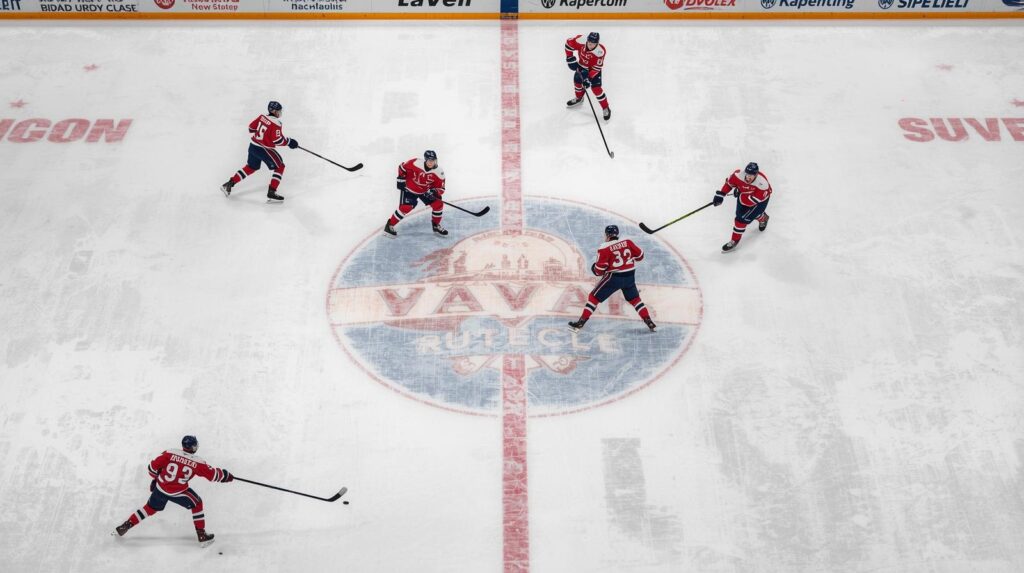
Too many men on the ice is often treated like simple math: saw an extra player, it must be a penalty. In practice it’s finer than that, and it partly depends on the rulebook and officiating interpretation.
The logic in North American rules (including the NHL) and in most other rule sets is similar: the entering player can step onto the ice when the player being changed is already at the bench and effectively “out of the play”—meaning he isn’t participating in the sequence. Officials aren’t looking at inches; they’re looking at involvement and whether the team gained an advantage because of the overlap.
Most often, the penalty shows up in two cases. The first is when a player comes on too early and the team actually gets an extra skater who affects the shape. The second is when, during the overlap, one of the two interferes with the play: plays the puck, blocks an opponent, impedes movement, or changes possession in a way that creates a competitive advantage. If the puck hits a changing player by accident, the call usually depends on whether the action was intentional, whether it affected play, and how the specific rule set describes that moment.
Bench management: why line change “logistics” matter
Bad changes often start not on the ice, but on the bench: a jam forms at the door, someone can’t get out in time, someone can’t get in, and the team loses positional integrity for a second. That’s why clubs pay attention to bench “logistics”—who sits where, who follows whom, and how to avoid collisions at the gate.
There isn’t one universal seating scheme. Often defensemen sit compactly and forwards sit in threes next to their linemates; sometimes it’s adjusted based on which side is more convenient for specific changes. A lot depends on the bench layout and even small things like how the door opens and where it’s easier to step over the boards.
Communication tends to look simple, but it saves moments and penalties: short cues like “I’m off,” “I’ve got you,” “next line—get ready” remove uncertainty in advance, and the change becomes a five-man decision rather than a set of individual impulses.
Line changes after stoppages: icing and the home team’s last change
There are situations where a team can’t freely change after a whistle. The best-known example is icing: in the NHL and many leagues, the team that iced the puck typically isn’t allowed to change before the next faceoff. At the same time, details and exceptions depend on the rulebook: different competitions handle specific procedural cases differently (injuries, waved-off icing, a goalie change, and other nuances).
The order of changes on faceoffs also matters because of matchups. In the NHL, the home team has the last-change advantage: it can react to the opponent’s personnel after a stoppage, giving the coach extra control over which combinations collide on the ice. In tournaments and leagues using IIHF rules, the procedure is different, but the meaning is similar: on stoppages, the coach has more power over how the next sequence will start.
Why line changes matter tactically: matchups, tempo, and vulnerable seconds
Changes are a tool for managing pace and the opponent. Coaches try to send attacking groups out against those who have a harder time handling speed and defensive quality; the other team answers in kind. This is especially visible where the home team can force matchups through the last change.
The long change adds another layer: it’s harder for a tired player to get off, and the opponent can hold the puck to stretch the overlap moment. In the analytics world, people often mention the undercut—changing a bit earlier so you come out fresher for the next stretch and don’t lose the play on your legs. It’s not a “secret system,” it’s timing work that shows up best in high-tempo games.
Common line change mistakes that lead to goals or penalties
Most often, changes break a team in three ways. First, an extended shift: a player stays out when the speed is already dropping, then tries to “hang on” for the perfect moment that may never come. Second, an early entry with immediate involvement in the play while the player being changed is still effectively on the ice: that’s a direct path to too many men on the ice because it creates impact on the sequence. Third, a “crowd” change at the gate: several players leave and enter at once, a positional hole opens up on the ice, and a jam forms on the bench that only lengthens the overlap.
Line changes in special situations: pinned in-zone, penalty kill, and 6-on-5
When a team is pinned in its own zone, changes get harder: any player who peels off toward the bench can open up an extra man for the opponent on a rebound or at the blue line. That’s why in those stretches changes often happen one at a time and only after the puck has been moved out of immediate danger.
On the penalty kill, changes are usually more cautious: there’s less room for risk, and any confusion at the bench can turn into a shot from a dangerous area. On the power play, by contrast, changing is often tied to puck control: teams try to refresh without giving up possession simply because of rotation.
A separate situation is 6-on-5, when a team pulls the goalie and adds an extra skater. Mechanically, it’s also a change, but with a higher cost of error: bad timing gives the opponent a chance to shoot into an empty net. This is allowed almost everywhere, but the specific execution depends on the moment of the game, puck control, and how well the team can hold the sequence while the goalie heads to the boards and the sixth skater slots into the setup.