Minor vs. Major in Hockey: What Really Changes
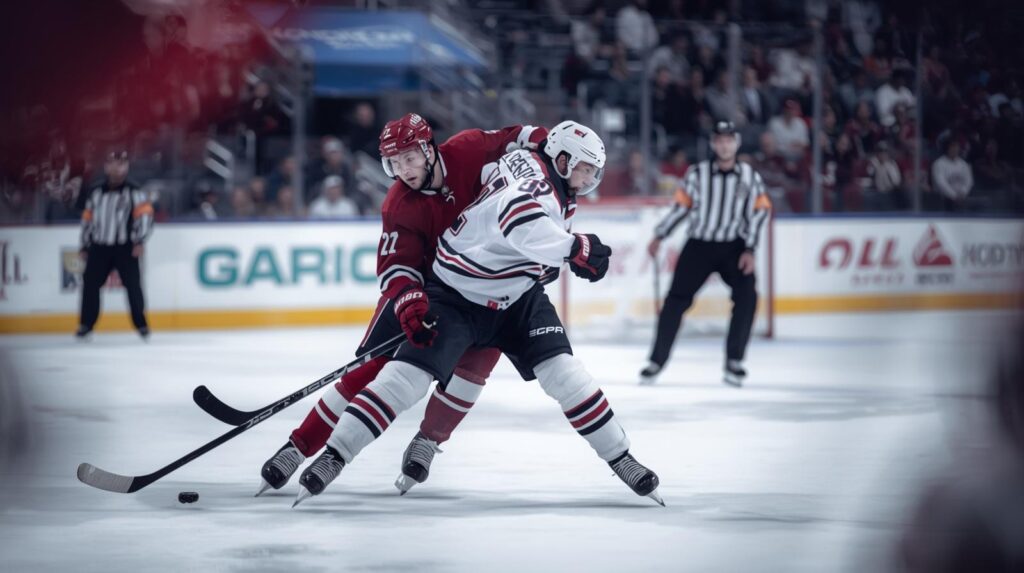
The difference between a minor and a major seems obvious until you start seeing a game as a system of trade-offs. A two-minute penalty kill is often a short episode you can survive—or even turn into something. A five-minute one is already an event that changes line rotation, risk management, and sometimes the entire script of a period. At the same time, the details depend on the rules of a specific league: the NHL, IIHF, and USA Hockey use similar logic, but differ in certain mechanisms and wording.
Table of Contents
- Minor vs. Major Penalties: The Key Difference
- How Penalties Change On-Ice Play: Power Play and Penalty Kill
- Minor Penalty: What It’s Called For and When It Ends
- Double Minor Penalty: Why 4 Minutes Is 2+2
- Major Penalty: Why It’s a Separate Event in a Game
- Misconduct, Game Misconduct, and Match Penalty: Similar Names, Different Penalties
- Delayed Penalty: Why the Referee Doesn’t Blow the Whistle Right Away
- Coincidental Penalties: Why It Sometimes Becomes 4-on-4
- Hockey Penalty Scenarios: How Time and On-Ice Strength Change
- NHL vs. IIHF vs. USA Hockey Rules: Where Details Differ Most
- Common Questions About Minor and Major Penalties
Minor vs. Major Penalties: The Key Difference
A minor penalty most often means a 2-minute penalty. In some formats with shortened periods—especially in youth competitions or local leagues—a minor can be shorter; that’s a matter of the specific organization’s rulebook. A typical feature of a minor is that it usually ends early if the opponent scores a goal while on the power play specifically because of that penalty. With multiple simultaneous penalties the logic remains, but it works more precisely: a goal usually “wipes out” one penalty (as a rule, the one that expires sooner), not “all minors on the clock.”
A major penalty in most adult rule sets is 5 minutes. Its defining trait isn’t only the length: a major, as a rule, is served in full and usually doesn’t “end” after a goal against. In some formats the major time can be “designated” and differ from 5:00, which is more common in competitions with short periods and in certain rule systems like USA Hockey. The meaning is the same: being shorthanded for the full term.
How Penalties Change On-Ice Play: Power Play and Penalty Kill
A penalty almost always means a change in numerical balance. The penalized team plays shorthanded (penalty kill), the other plays on the power play. It’s the same hockey, just with different priorities: the defense more often chooses reliability and energy management, while the attack has more time and space to move the puck and create traffic in front of the net.
How a player returns from the penalty box also matters. In many leagues, he can step back in “on the fly” immediately after the time expires, when the rules allow the team to be back at full strength. But there are situations where the return is delayed until the next stoppage—most often tied to coincidental penalties or a combination of penalties, so the team doesn’t end up with the wrong number of players on the ice. The exact mechanics depend on the rulebook.
Minor Penalty: What It’s Called For and When It Ends
A minor is the most common sanction. It’s assessed for actions that impede an opponent or disrupt the order of play. At the same time, a minor doesn’t mean a “soft” foul: slashing, cross-checking, boarding, or charging can be dangerous, and the penalty category often depends on the degree of contact, the player’s vulnerability, the consequences (including injury), and a particular league’s interpretations.
The key feature of a minor is early termination after a goal—but only under the right conditions. Typically, a minor ends if a goal is scored on the power play that resulted from that specific penalty. But if the teams are playing 4-on-4 due to coincidental penalties, or the manpower advantage is tied to a different combination of penalties, there may be no automatic “wipeout.”
A separate nuance is 5-on-3 situations: a goal usually ends only one of the active minors (as a rule, the one that expires sooner), while the other continues.
Double Minor Penalty: Why 4 Minutes Is 2+2
A double minor is two minors back-to-back. On the scoreboard it’s 4:00, but in terms of how it’s served, it’s 2 minutes plus another 2 minutes. If the team scores on the power play, only the current two-minute segment is wiped out, and the penalty then continues for the remaining portion.
The most recognizable cause is high-sticking that results in an injury. In the NHL, IIHF, and similar systems, in practice officials often look for a visible sign of injury (including blood), but formally the criterion is usually described as the fact of injury/damage itself, not “blood as a universal marker.” In recreational leagues, thresholds and interpretations can differ.
Major Penalty: Why It’s a Separate Event in a Game
A major is assessed for more severe and/or dangerous actions, and it affects the game differently than a minor. The team stays shorthanded for the full term, and that changes how both sides behave. On the penalty kill, it’s less about “getting through a shift” and more about surviving a long stretch without breakdowns. On the power play, there’s value in patiently holding the puck and grinding down the defense, because time works for the attacking team regardless of the score.
Across different rulebooks, the list of major-penalty situations may look similar, but consequences and interpretations differ. Fighting in the North American tradition is often assessed as a major, while in IIHF international tournaments the approach to fights is typically stricter. Spearing, butt-ending, serious boarding/charging, and checking from behind often lead to a major or even harsher sanctions—but it’s more accurate to say “often under certain conditions” rather than “always.”
Misconduct, Game Misconduct, and Match Penalty: Similar Names, Different Penalties
A misconduct usually means a 10-minute disciplinary penalty (or a “designated” time in formats with short periods). A misconduct by itself typically doesn’t create a manpower disadvantage, because the team immediately puts a substitute on the ice. Often a misconduct comes together with a minor or a major (for example, 2+10): then the shorthanded situation is created by the timed penalty, while the misconduct limits that specific player’s involvement in the rotation.
A game misconduct and a match penalty usually mean removal for the remainder of the game and almost always bring disciplinary consequences beyond that game. How exactly the game sheet records who serves the time on the clock, and how the team returns to even strength, can vary between leagues and age categories.
Separately, there’s the bench minor—a team penalty (for example, too many men) that is recorded against the team but served by a specific player under league rules.
Delayed Penalty: Why the Referee Doesn’t Blow the Whistle Right Away
On a delayed penalty, the referee raises an arm but play continues until the offending team gains control of the puck. The team that was fouled often pulls the goalie and sends out an extra skater: it understands that as soon as the opponent gains control there will be a stoppage, so it can boost the attack. The risk remains—an errant pass or a failed play can lead to a goal into the empty net—but the logic is usually justified by the extra player.
Coincidental Penalties: Why It Sometimes Becomes 4-on-4
Coincidental penalties are when both teams receive penalties of the same duration at the same time. In most major rule sets (including the NHL and IIHF), coincidental minors at 5-on-5 usually lead to 4-on-4: more space, more speed, and more rush chances.
But in real games, coincidental penalties often overlap with additional penalties, so the on-ice strength is determined by the full picture: play can remain 5-on-4, become 5-on-3, or 4-on-3. Because of that, it sometimes looks like coincidental penalties “changed nothing,” when in reality another penalty is simply in effect at the same time.
Hockey Penalty Scenarios: How Time and On-Ice Strength Change
Minor and a power-play goal: in standard 5-on-4, a goal usually ends the minor, and the teams return to even strength. If other penalties are active at the same time, even strength may not be restored.
Double minor and a goal: the goal ends only the current 2 minutes; the remaining portion continues as another minor.
Major and goal(s): on a major, the penalty kill usually continues for the full term; goals scored do not cancel the remaining time.
Misconduct alone and together with a minor/major: a standalone misconduct often doesn’t change on-ice strength, while a combination like 2+10 creates a penalty kill because of the two minutes, and the specific player is out of the rotation longer.
NHL vs. IIHF vs. USA Hockey Rules: Where Details Differ Most
The minor/major categories are recognizable almost everywhere, but differences most often show up in three places: penalty lengths in short-period formats, rules for leaving the box with coincidental and combined penalties, and video review procedures in leagues that use them—including cases where the penalty category can be confirmed or changed. It’s better to phrase these points without universal claims and, if strict accuracy for a particular league is needed, to check the current edition of its rulebook.
Common Questions About Minor and Major Penalties
Does a minor always “wipe out” after a goal?
It usually ends early only when a goal is scored on the power play created by that specific penalty; with multiple active penalties, a goal most often wipes out one of them.
Can you wipe out a major with an opponent’s goal?
In the standard rules logic, a major is served in full; exceptions are possible only in special formats if the rulebook explicitly says so.
Why is a major sometimes not 5 minutes?
In some organizations and age formats with short periods, major time can be designated and differ from 5:00.
Does blood on a high-sticking call always mean a double minor?
In many top leagues, blood often serves as a practical indicator of injury, but the formal criterion is usually described as injury/damage; interpretation depends on the rules and how they’re applied.
Why doesn’t the player come out immediately when the time ends?
Most often because of coincidental penalties, disciplinary penalties, or combinations of multiple active penalties, where coming out on the fly could result in the wrong on-ice strength.