The Truth About Hockey Shootouts: Rules and Format
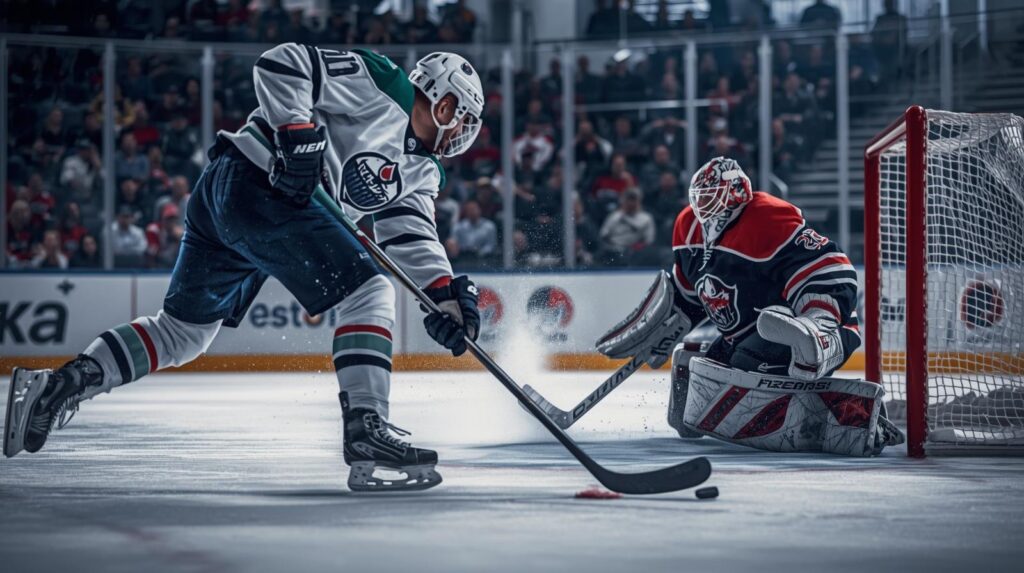
Table of Contents
- What a Shootout Is in Hockey
- Penalty Shot vs. Shootout: Similar Setup, Different Purpose
- When Shootouts Are Used — and When They’re Avoided
- How the Shootout Works: Format and Order of Attempts
- How Shootout Shooters Are Selected
- Who Can Take a Shootout Attempt (Eligible Players)
- Repeat Shooters and What Happens When a Team Runs Out of Players
- Rules for Taking a Shootout Attempt: Continuous Forward Motion
- Rebounds and Follow-Ups in the Shootout
- Goalie Rules in a Shootout
- Shootout Violations and Disallowed Goals
- Shootout Rules Differences: NHL vs. IIHF vs. USA Hockey
- Shootout Strategy: Why It’s Still a Team Skill
- FAQ: Shootout Rules in Hockey
What a Shootout Is in Hockey
A shootout, or a penalty shootout, is a way to determine a winner in a game that ends tied and, under the rules, can’t finish without a result. In many leagues, the shootout comes after overtime, but that’s not universal: in some competitions it can be scheduled right after regulation, and in the playoffs shootouts are often avoided altogether, with overtime played until a goal is scored.
The idea of a shootout is simple: teams alternate “shooter vs. goalie” attempts, and the winner is the team that scores more within the established format.
Penalty Shot vs. Shootout: Similar Setup, Different Purpose
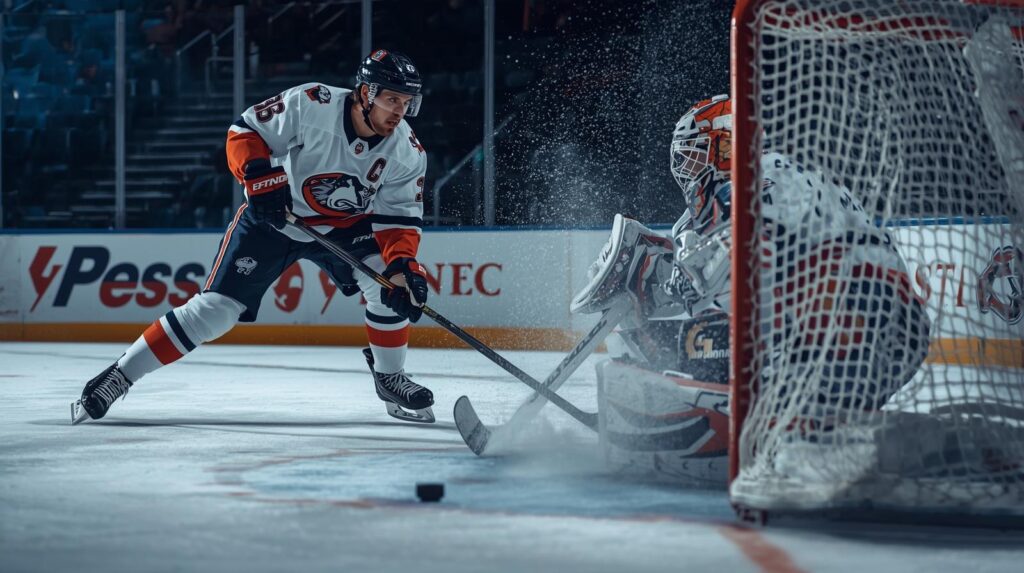
A penalty shot and a shootout attempt look similar—one player goes in alone against the goalie. But they’re different situations.
A penalty shot is awarded during the game as a sanction for an infraction that took away a clear scoring chance. The exact criteria and wording depend on the specific rulebook (NHL, IIHF, USA Hockey, and others), so the details can vary.
A shootout is a tiebreaker after playing time has ended. There’s no “punishment” element for a foul here: it’s a procedure that replaces continuing the game under the format set by the competition.
When Shootouts Are Used — and When They’re Avoided
Shootouts are most common where the rules need games to end on a predictable timeline: regular seasons, group stages, and crowded schedules. The North American model with a short overtime and then a shootout has become familiar, but applying it to all hockey would be wrong: the overtime format, its length, and whether a shootout is even allowed depend on the competition.
In the playoffs of many tournaments, sudden-death overtime is more common. That keeps the outcome within the flow of the game rather than deciding it through a set of individual attempts.
How the Shootout Works: Format and Order of Attempts
A typical script looks like this: teams take an initial set of attempts in alternating order, then if it’s still tied they move to sudden death—one attempt per team until there’s an advantage.
The details vary. In some leagues the standard is three attempts; in others it’s five. The shootout can end early if, with the remaining attempts, the trailing side can no longer catch up. The order (who shoots first) is set by the rules: it might be a team’s choice, a draw, a home/away rule, or another option.
In most common formats, the team order in sudden death stays the same. In some tournaments you can see different approaches, but that’s more the exception than the general practice.
How Shootout Shooters Are Selected
The process for selecting shooters is one of the areas where “what’s common” is easy to confuse with “what’s mandatory.”
In some competitions, the coach declares a list in advance for the opening attempts. In other formats, the choice is made as the shootout unfolds—attempt by attempt. That affects not only tactics but also how the shootout itself feels: in some places it runs on a strict pre-set order, while in others decisions are made situationally.
Who Can Take a Shootout Attempt (Eligible Players)
Usually, eligible players are those dressed for the game who, by the time the shootout begins, have not been removed from the game for disciplinary reasons and are not restricted by their penalty status. Some rule sets explicitly bar players who received a game misconduct or a match penalty.
In USA Hockey rules, for example, you’ll find the principle that a player serving a minor or a misconduct at the start of the shootout may not participate. In other codes the logic is often similar, but the exact cutoff point and the list of sanctions can differ—this is always defined by the competition’s document.
Repeat Shooters and What Happens When a Team Runs Out of Players
A common principle is that a player shouldn’t take a second attempt until all available skaters on his team have taken one. That protects the shootout from a scenario where one team keeps sending the same specialist over and over.
If a team has fewer eligible shooters (because of penalties, injuries, or disciplinary sanctions), rule sets typically include a way to keep the shootout moving without a dead end. But the mechanics differ: in some places repeats are allowed earlier, in others the opponent’s options are restricted to keep conditions comparable. This point is especially sensitive to the specific tournament.
Rules for Taking a Shootout Attempt: Continuous Forward Motion
In most rulebooks, the key idea is that the attempt must remain a continuous attack. The shooter can change speed, cut across, deke, and pause. Arguments usually start where the movement begins to look like a reset of the play—for example, a noticeable retreat backward or a loss of the attacking logic.
Plays that look similar on video can be ruled differently in different leagues not because it’s random, but because of the wording of the specific rule and the standard interpretation.
Rebounds and Follow-Ups in the Shootout
“Rebounds are not allowed” is often said as if it’s universal, but in reality it comes down to how continuity is interpreted. Under many rules, a goal can count off a rebound if it’s part of the same sequence and the attempt has not ended under the rules.
A different case is continuation after the moment has clearly ended. If the referee considers the attempt over (for example, the puck came out of control and the attack stopped), there won’t be a second run, even if the shooter manages to touch the puck again.
Goalie Rules in a Shootout
Restrictions on the goalie depend on the code and have changed in different years, so it’s more accurate to put it this way: the rules define how the goalie may begin the attempt and which actions are considered a procedural violation.
Separately, many rule sets prohibit non-hockey ways of stopping the attempt—for example, throwing a stick or a piece of equipment toward the puck or the shooter. The sanction can vary, from a re-take to an awarded goal, depending on the league.
Goalie substitutions in the shootout are also regulated differently. In some local rule sets, changing after the shootout has started is limited, sometimes with language about a substitute goalkeeper. In professional leagues, a change is more often possible, but only if procedures are followed.
Shootout Violations and Disallowed Goals
Most disputed shootout plays come down to two questions: was the attempt taken in a legal manner of movement, and was there an infraction that affected the duel.
If the shooter violates the procedure, the goal usually doesn’t count and the attempt is considered used. If the goalie violates the procedure, a re-take is more common or another remedy that restores a fair chance to the attacker, but the specifics depend on the rules.
In practice, arguments most often revolve around details that change the continuity assessment: the net being displaced, equipment issues, interference from the bench, and situations where the officials must decide whether the attempt ended before the puck crossed the goal line.
Shootout Rules Differences: NHL vs. IIHF vs. USA Hockey
The NHL uses the shootout as part of the regular season: after overtime, the game can go to a shootout. In tournament logic and statistics, the league typically values wins earned in regulation or overtime more than shootout wins. That’s an accounting system issue, not an attempt to devalue the result.
In IIHF and international competitions, the format depends more heavily on the stage of the event: in group play, shootouts are used more often, while in the playoffs sudden-death overtime is more common. The number of attempts and procedural details are set by the regulations of the specific tournament.
USA Hockey emphasizes that the format for determining a winner can be set by the league or association, but the shootout itself must follow the established procedure and the participation limits tied to a player’s disciplinary status.
Shootout Strategy: Why It’s Still a Team Skill
Only one shooter and one goalie are on the ice, but a shootout isn’t just a bag of tricks. The shooting order is a balance of reliability and variety, plus an understanding of who handles the pressure of the first attempts better and who is steadier in a long sudden-death run.
For a goalie, a shootout is work with players’ habits: entry speed, puck position, the typical deke point. Even with a limited number of attempts, it becomes a game of observation and adjustments.
FAQ: Shootout Rules in Hockey
Are there shootouts in the playoffs?
In many leagues, playoff games are played without a shootout, with overtime periods played until a goal is scored. But the final rule is set by the competition regulations, so exceptions exist.
How many attempts does each team get?
Three or five attempts per team are common, followed by sudden death. The exact number depends on the league or tournament.
Can a player serving a penalty participate in the shootout?
Many rulebooks restrict players who, at the time of the shootout, are serving a minor or a disciplinary penalty (misconduct). The exact wording depends on the competition rules.
Are rebound goals allowed?
Under many rules, a goal off a rebound can count if it’s part of one continuous attempt and the sequence has not ended under the rules.
Can you change goalies in the shootout?
It depends on the regulations. Some tournaments restrict it, others allow it if the procedure is followed.
Why did the puck cross the line but the goal didn’t count?
Usually the referee rules that the attempt ended before the puck crossed the goal line, or identifies an infraction that nullifies the result under the rules.